Social & Behaviour Change
October 20th, 2025
Why India’s Fastest-Growing Jobs Are the Least Desired
A behaviour-science take on stigma, identity, and future of work.
Ankita Mirani, Social Designer and Founder @Social Innovation Studio
Archana AS, Communication Lead @Social Innovation Studio

What’s Inside:
Introduction
India is witnessing one of the most striking contradictions in its economic story: The blue-collar workforce crisis.
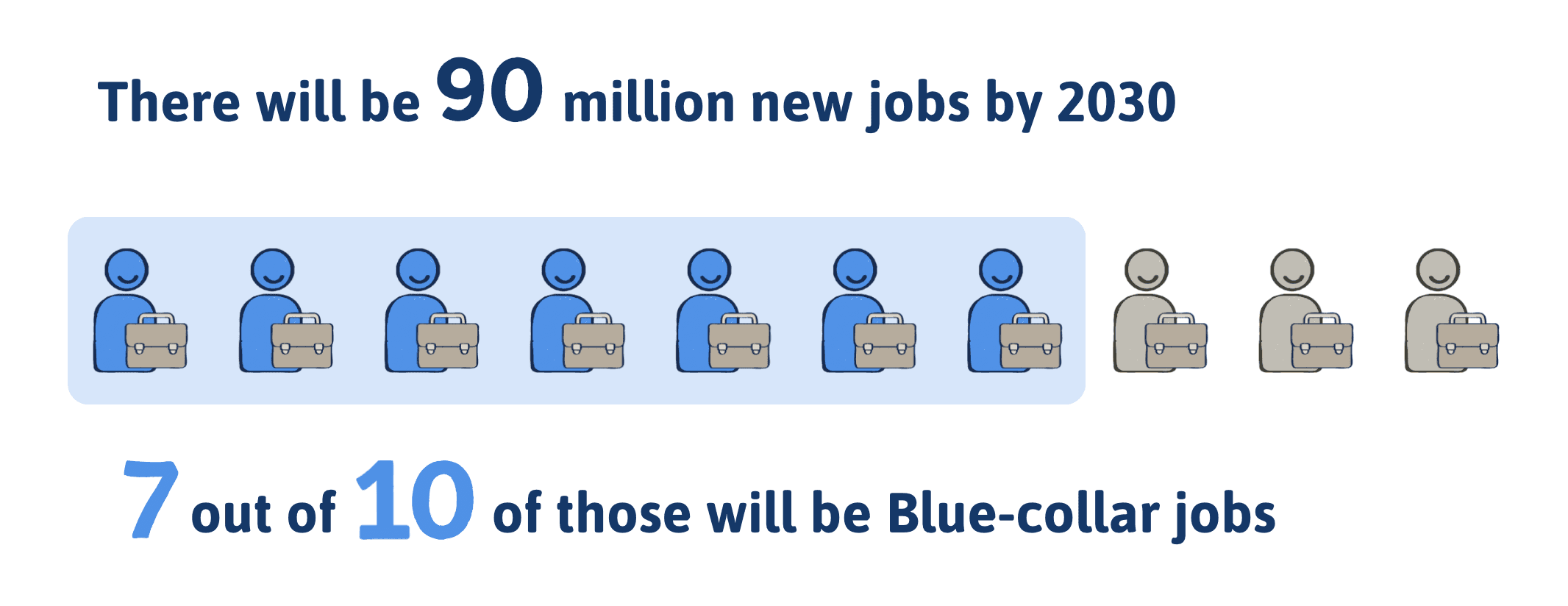
70% of the 90 million new jobs in India are expected to be blue-collar roles by 2030, but society is collectively turning away from the very roles driving growth. The solution? Understanding the deep behavioural forces at play and designing interventions that work with human psychology.
Let's explore how various factors are reshaping India's labour landscape, and what it means for the future of work.
The Great Blue-Collar Paradox
India is on the cusp of unprecedented job creation: electronics, auto components, and FMCG are expanding at 12–15% annually. Infrastructure projects are multiplying.
Yet we face a staggering contradiction: job postings surged 62% while job-seeker interest crawled up just 5%. The problem? Nearly 150 million skilled workers are short of what the economy demands by 2030.
Despite growth, young workers are turning away from the very roles driving the economy forward. Behaviour science helps reveal why.
The Psychology Behind the Skills Gap
Social Proof & Status Signalling
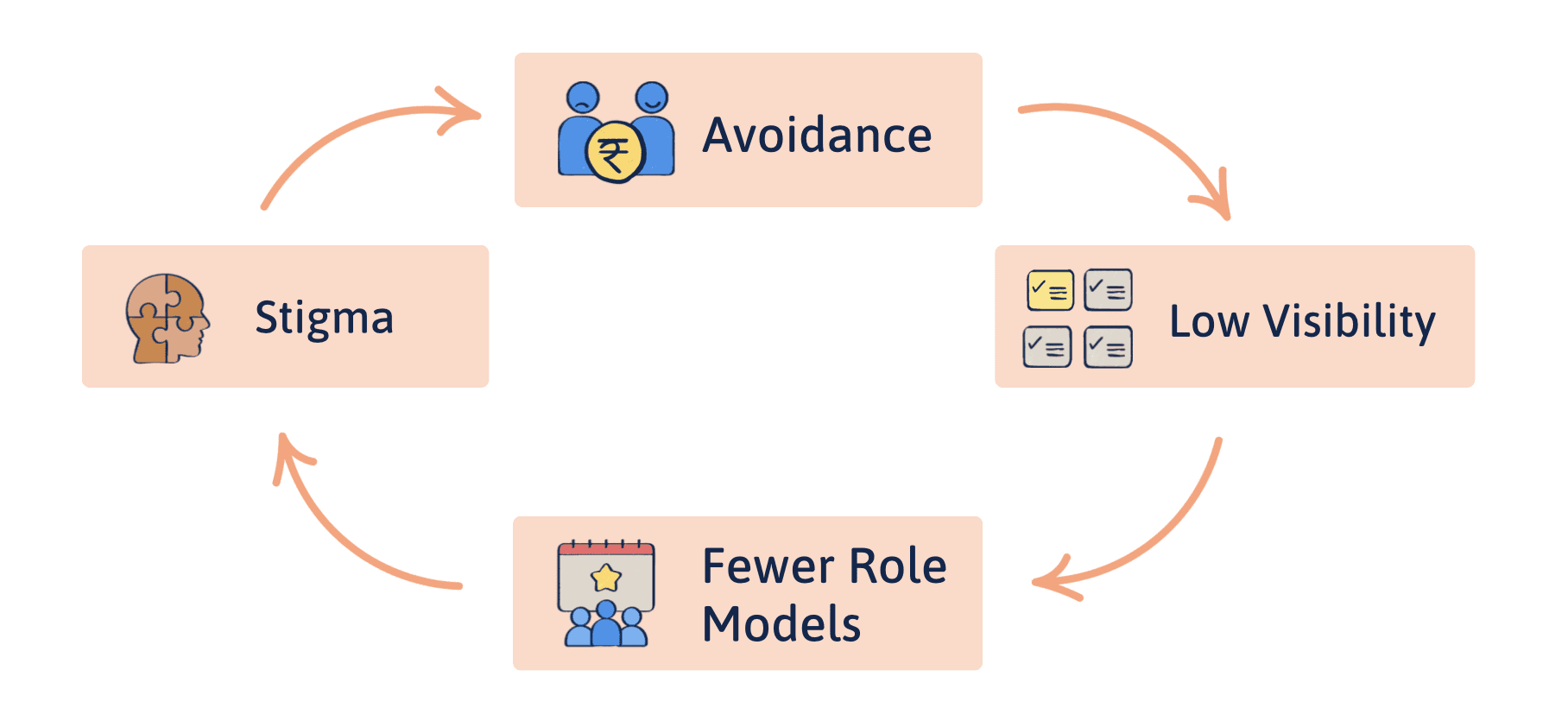
Young Indians look to peers, parents, and role models to define “success.” Almost all the visible role models, teachers, relatives, neighbours, and film characters signal that prestige lies in white-collar jobs. With few celebrating blue-collar careers, the absence itself becomes a negative signal.
Loss Aversion & Risk Perception
People fear losses more than they value equivalent gains.Blue-collar roles are framed as “loss of status,” not gainful opportunities, even when they offer stability. White-collar roles, though uncertain, are seen as socially safer.
Availability Heuristic & Aspiration Gaps
We imagine what we can recall. And because mainstream stories highlight engineers and IT professionals, young people cannot visualise a successful future in blue-collar work.
What doesn’t get visibility doesn’t get aspiration.
Why Traditional Solutions Miss the Mark

Training, certifications, and wage hikes alone cannot fix a problem rooted in identity and social meaning.
Identity & Belonging: Families often see manual work as a backward step, tied to caste histories and stigma. Unless job choices align with aspirational identities, uptake will remain low.
Narrative Power: People follow stories, not statistics. White-collar jobs come with visible narratives of social respect; blue-collar work doesn't.
Social Cascades: Communities make decisions collectively. When influential families reject blue-collar roles, entire neighbourhoods follow. These cascades can’t be shifted with training programmes alone.
The Real Numbers Behind the Behaviour
60 million workers shifted back to agriculture in four years
17–40% drop in interstate migration
Only 5% of India’s workforce has formal vocational training
70% gender pay gap in blue-collar roles
What This Means for Policy and Practice
Behavioural insights point toward five priorities:
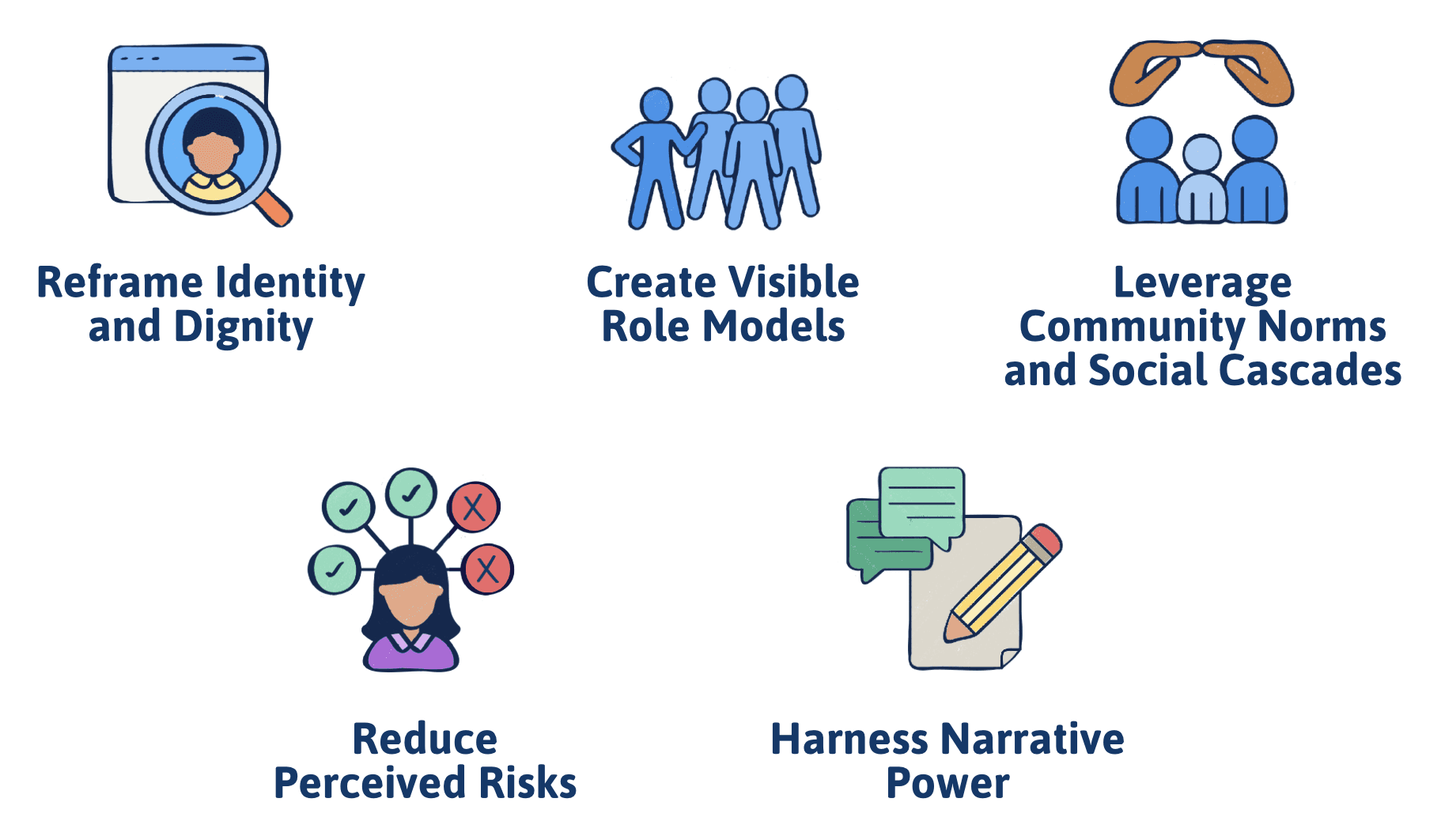
1. Reframe Identity and Dignity
Position blue-collar work as pride-filled, essential, and future-ready. Narratives of craftsmanship, contribution, and national development can shift aspirations.
2. Create Visible Role Models
Showcase electricians, welders, machine operators, and construction workers who built stable, dignified lives.
3. Leverage Community Norms and Social Cascades
Career decisions are often collective. When panchayat leaders, SHGs, teachers, or local influencers endorse vocational pathways, acceptance spreads faster.
4. Reduce Perceived Risks
Guarantees around wages, safety, and career pathways reduce loss aversion, helping families see these roles as upwardly mobile.
5. Harness Narrative Power
Films, media, short stories, and public campaigns can normalise pride in labour.What IT parks did for aspirations in the 1990s, industrial trades can do in the 2020s.
Conclusion
India’s blue-collar workforce gap is more of a behavioural problem rooted in identity, visibility, and collective norms. When we shift the stories people tell, the role models they see, and the way dignity is expressed, we reshape the future of work.
Behaviour science helps us move past surface-level solutions to address the real drivers of choice: status, belonging, aspiration, and risk. And when communities start to see pride and mobility in these roles, adoption becomes natural, not forced.