Program Innovation
Decoding Agroforestry for Farmers
Enviroment and Climate
Behaviour Science
Systems Thinking
Client:


We partnered with SayTrees to co-design a farmer-focused system and toolkit that simplifies the concept of agroforestry and drives adoption on the ground.
Timeline: 8 months
Offerings
Program Implementation Journey
Farmer Engagement & Behaviour Change Journey
Farmers practising monocropping, saw agroforestry as a complex and uncertain shift. The technical nature of the concept, unclear timelines for returns, and limited understanding of SayTrees’ support created hesitation.
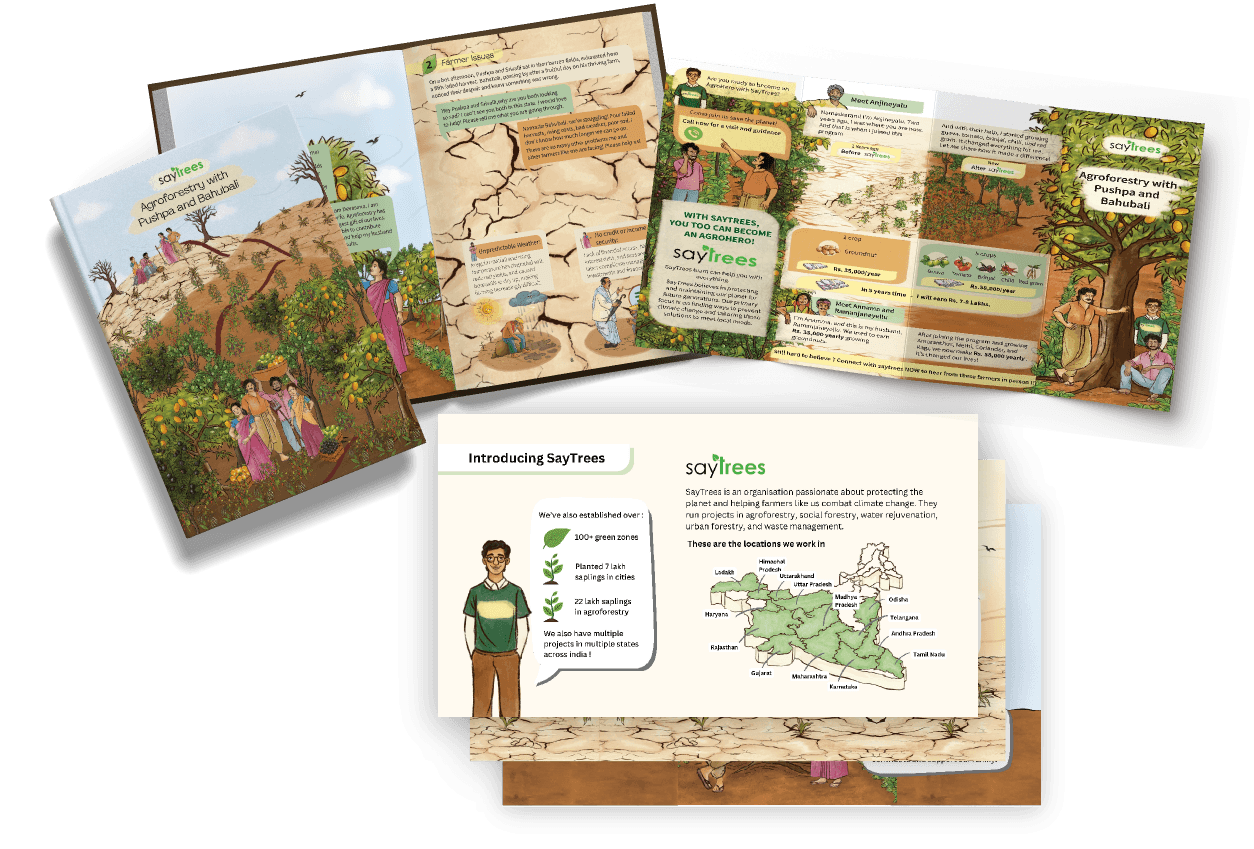
To address this, we designed an end-to-end delivery system and toolkit, including a brochure, presentation, and booklet. Each tool was mapped to a stage in the farmer’s journey, ensuring the right information reached them at the right time.
By making the concept visual, relatable, and easy to act on, the tools helped farmers clearly understand benefits, build confidence, and move steadily from awareness to adoption.

What did we do?
We designed the delivery of the agroforestry toolkit, aiming to make adoption simple, engaging, and scalable.
We simplified the concept of agroforestry
We made it visual and low-literacy friendly
We made them relatable and contextual
We designed with minimal cognitive load
Journey


2
Farmers and Family baithak
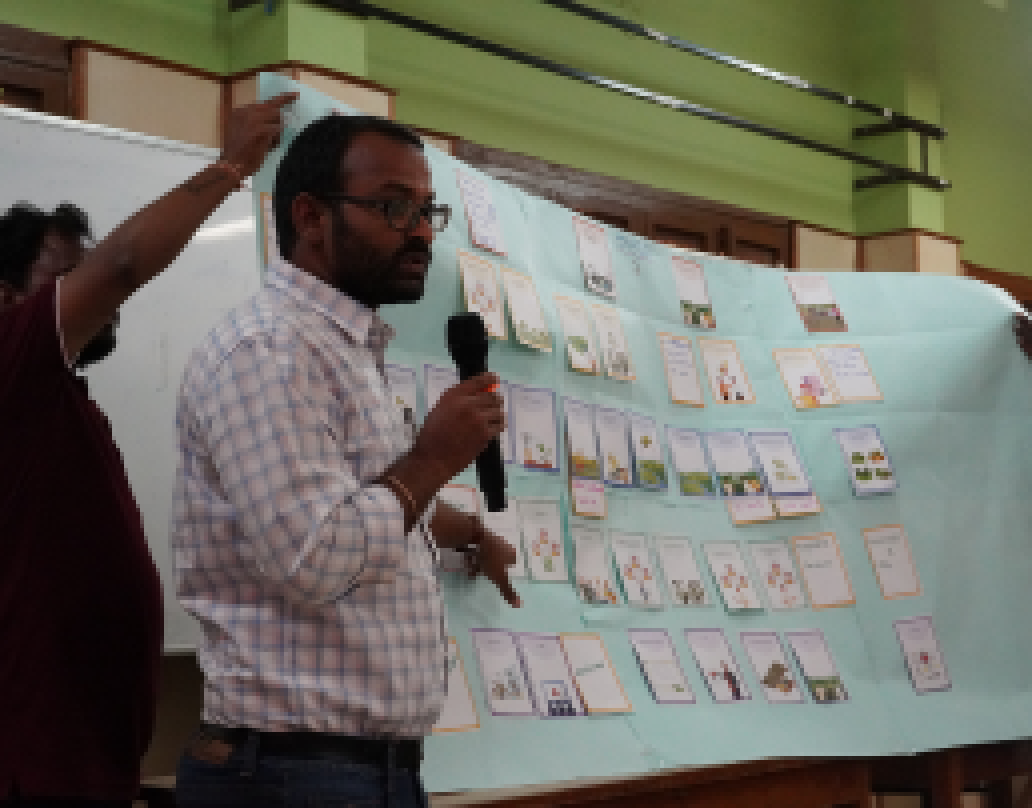
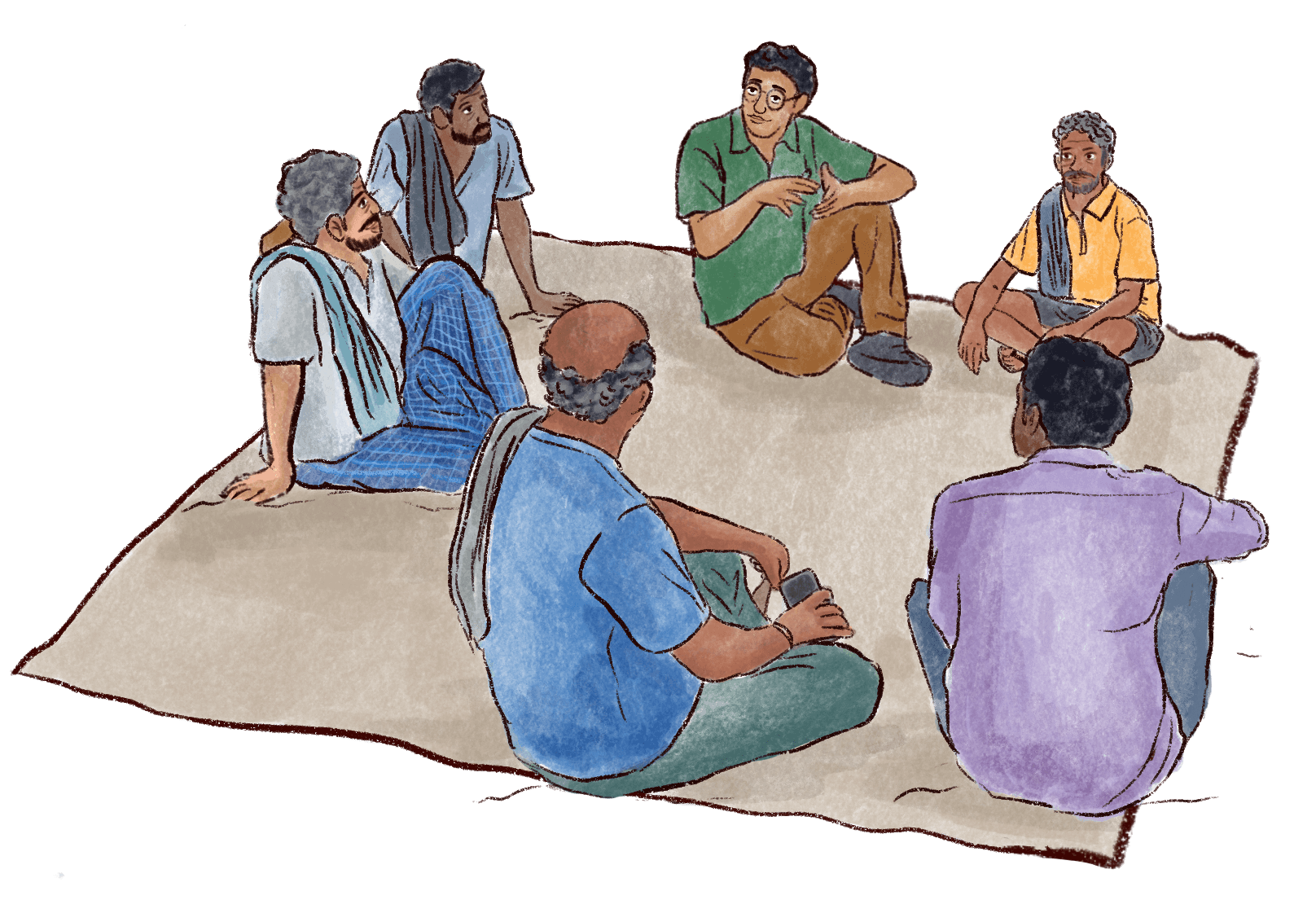
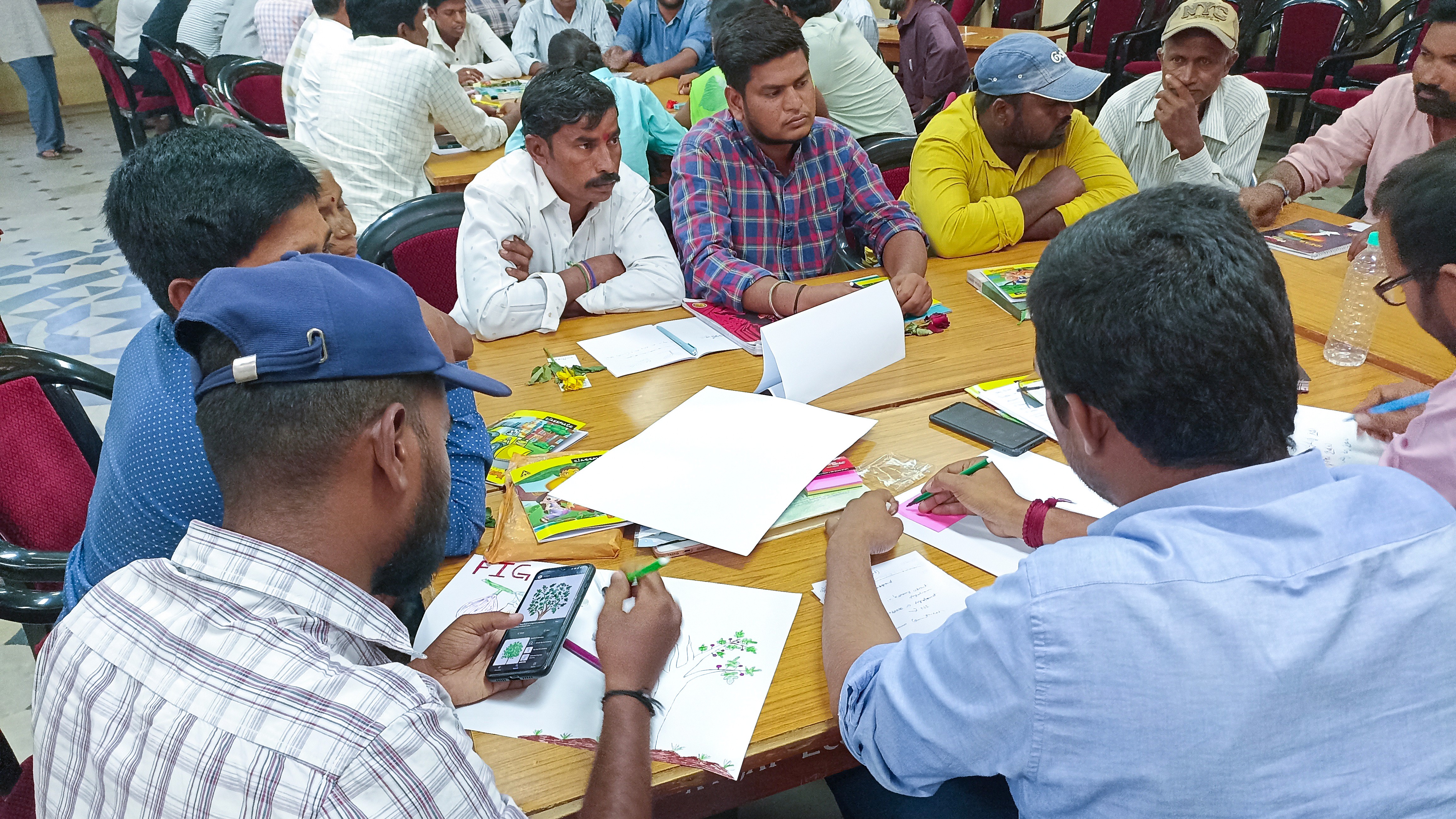
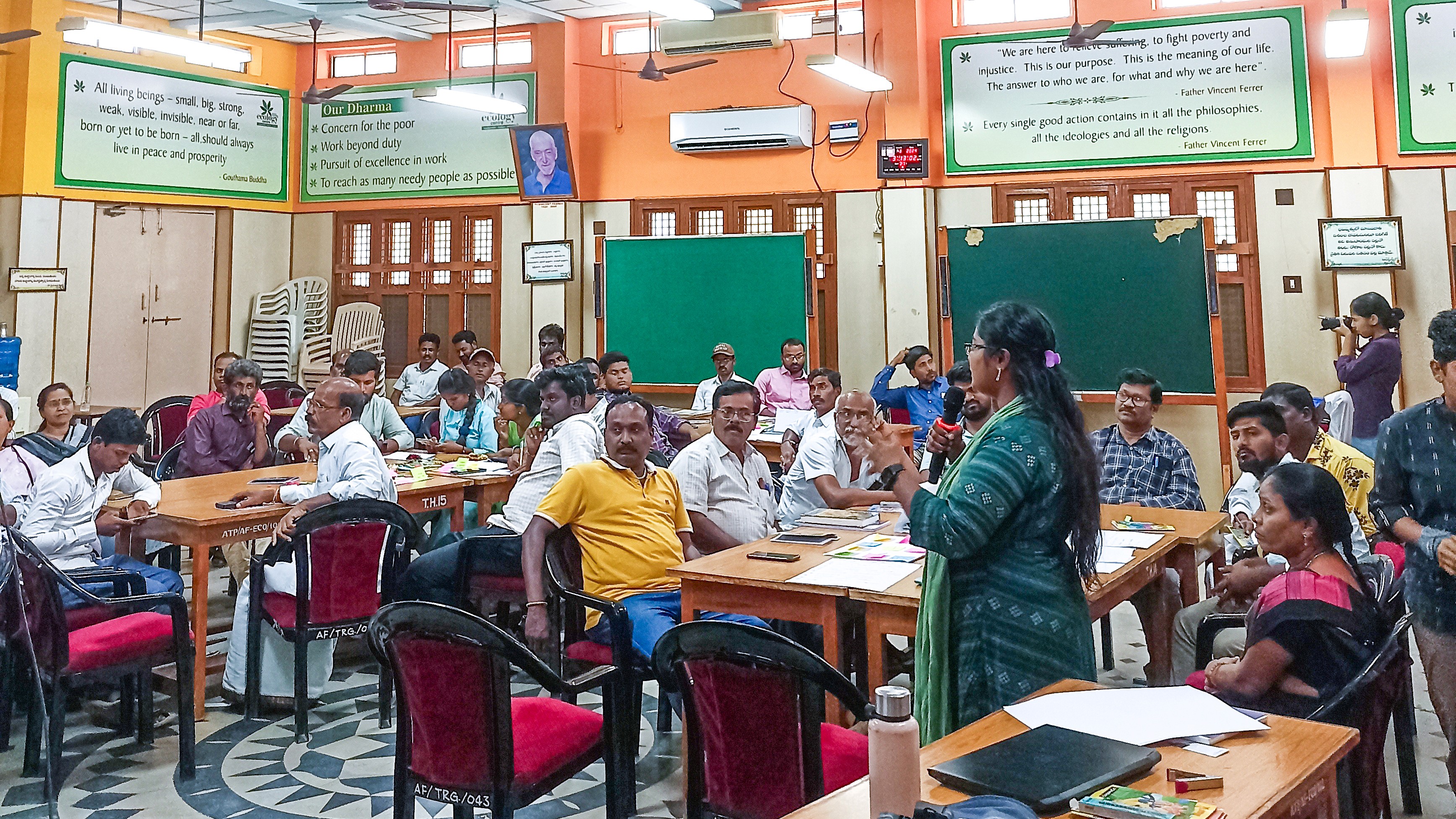
Next, the team held a group session with farmers to explain what agroforestry means, and investments and returns.
Presentation
3
Exposure visit to agroforestry farms
Interested farmers were taken to visit other agroforestry farms to see real examples and speak with them.
Booklet
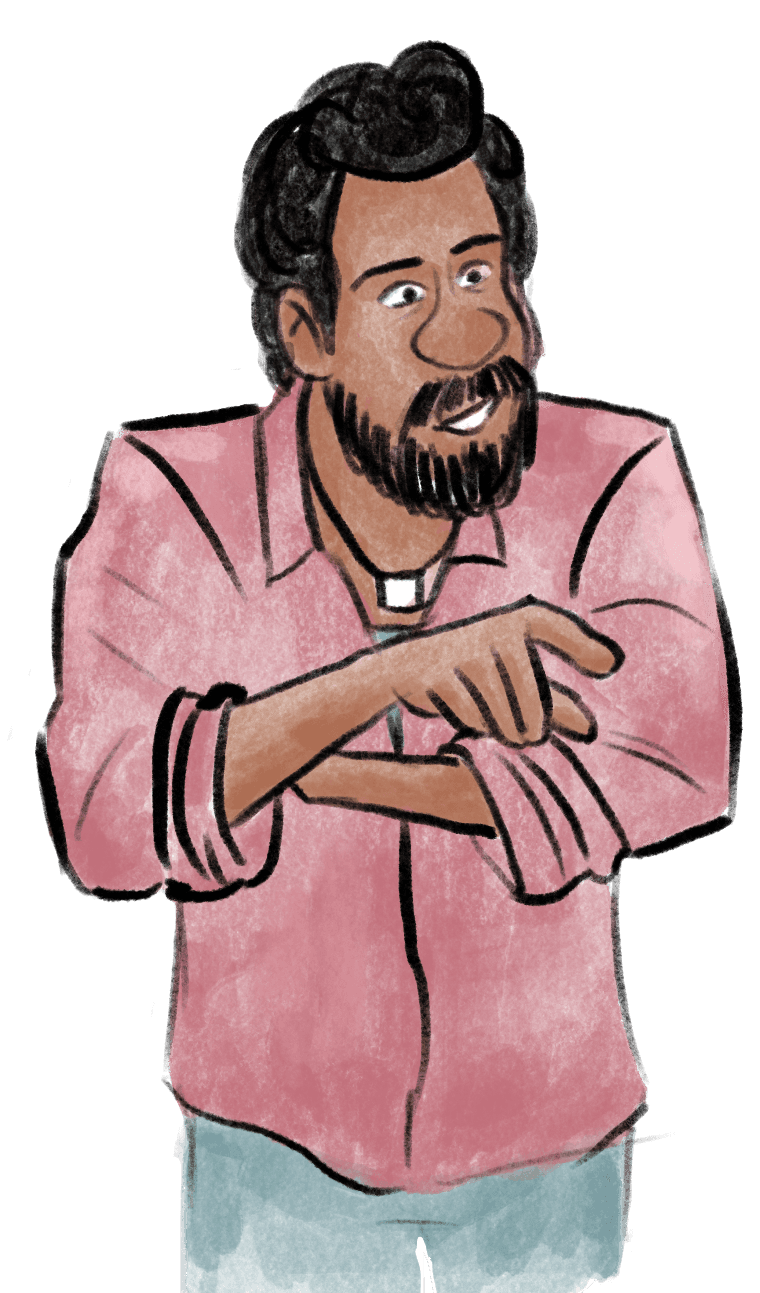
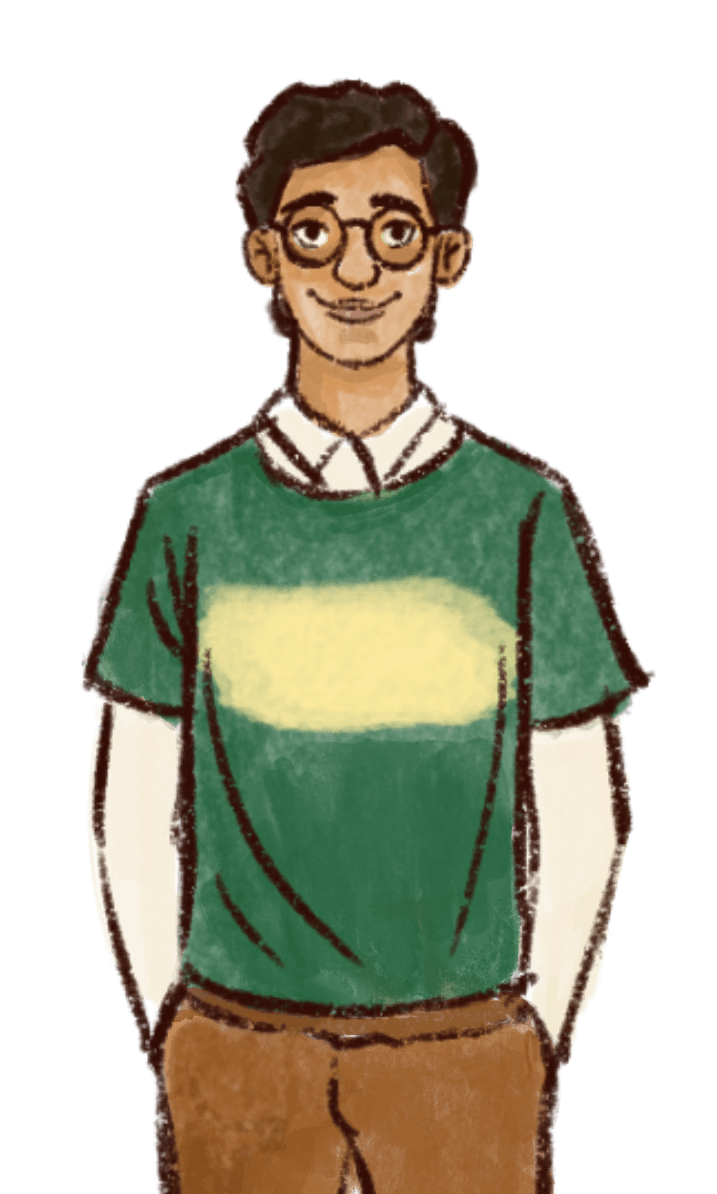
4
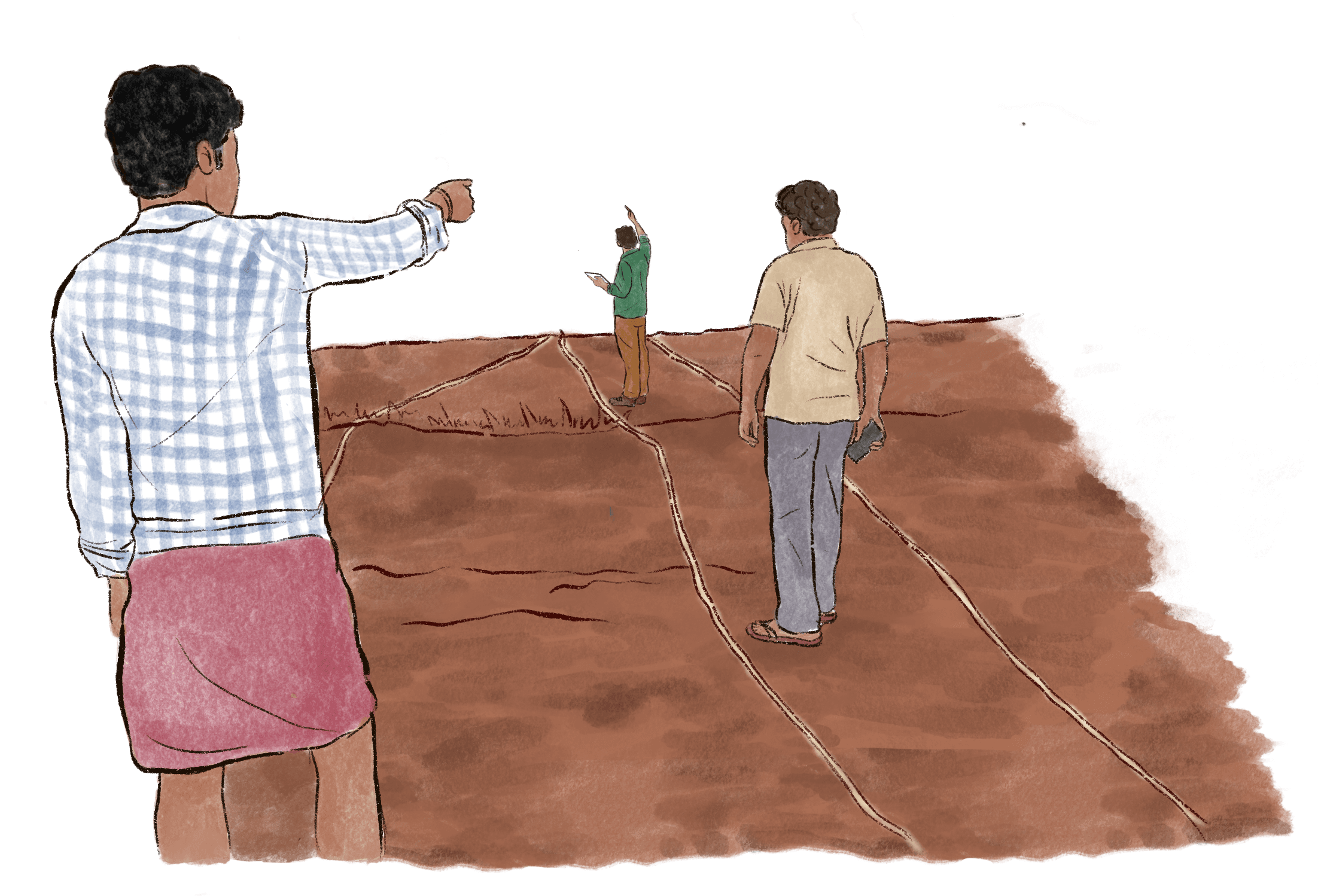
Expert session
The field team then met interested farmers again to help plan crops, responsibilities, and investment.
5
Enrolment and adoption
Farmers who decided to adopt agroforestry were supported by experts with tailored guidance and care schedules.
Brochure
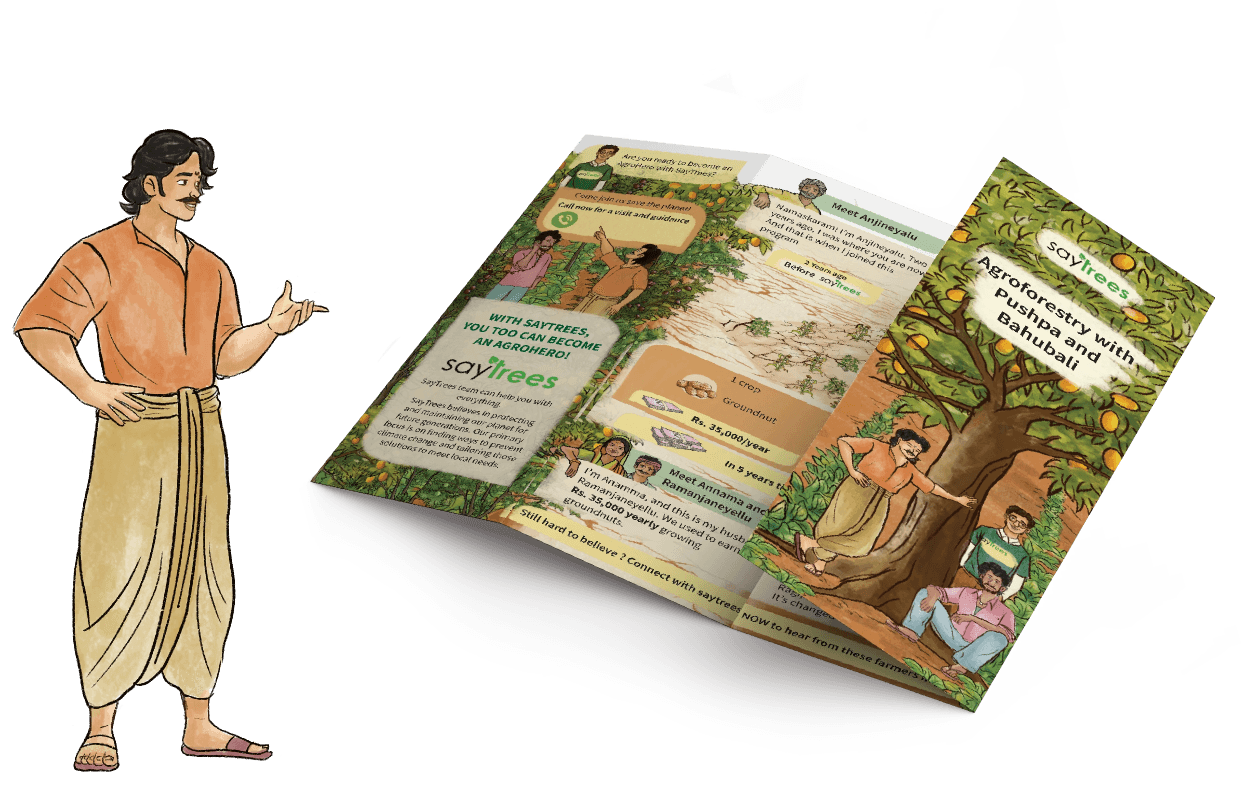
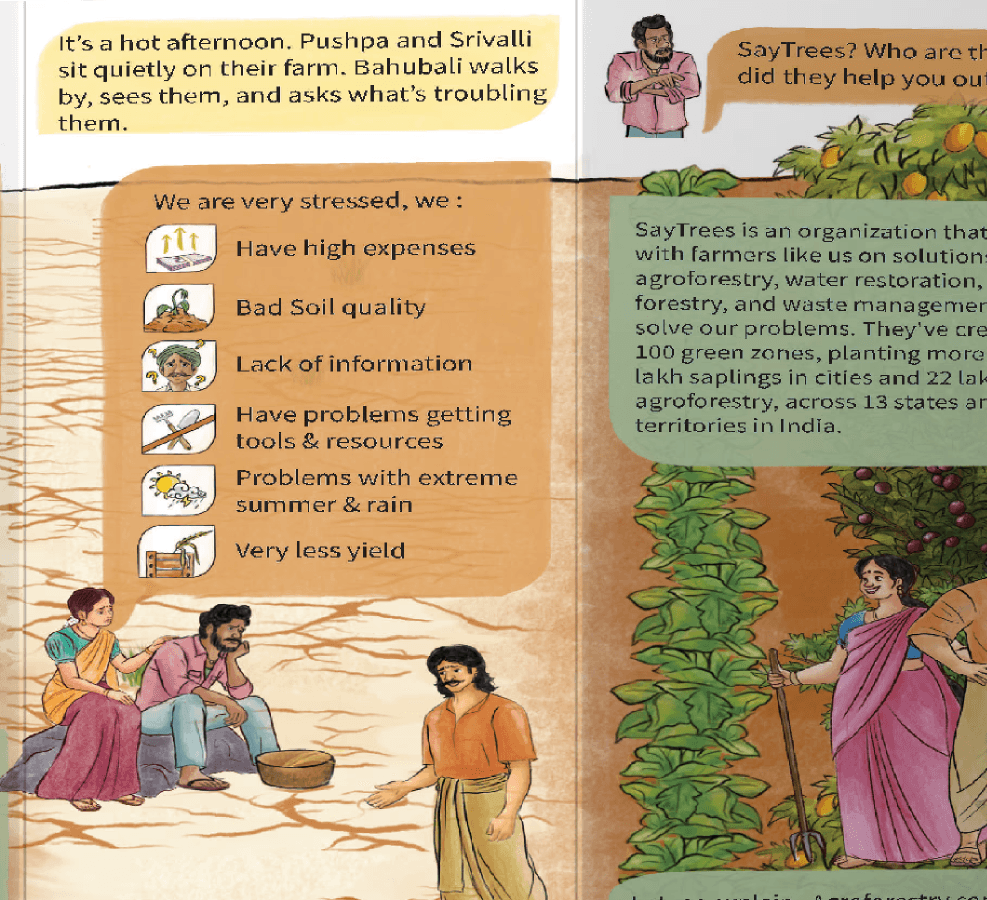
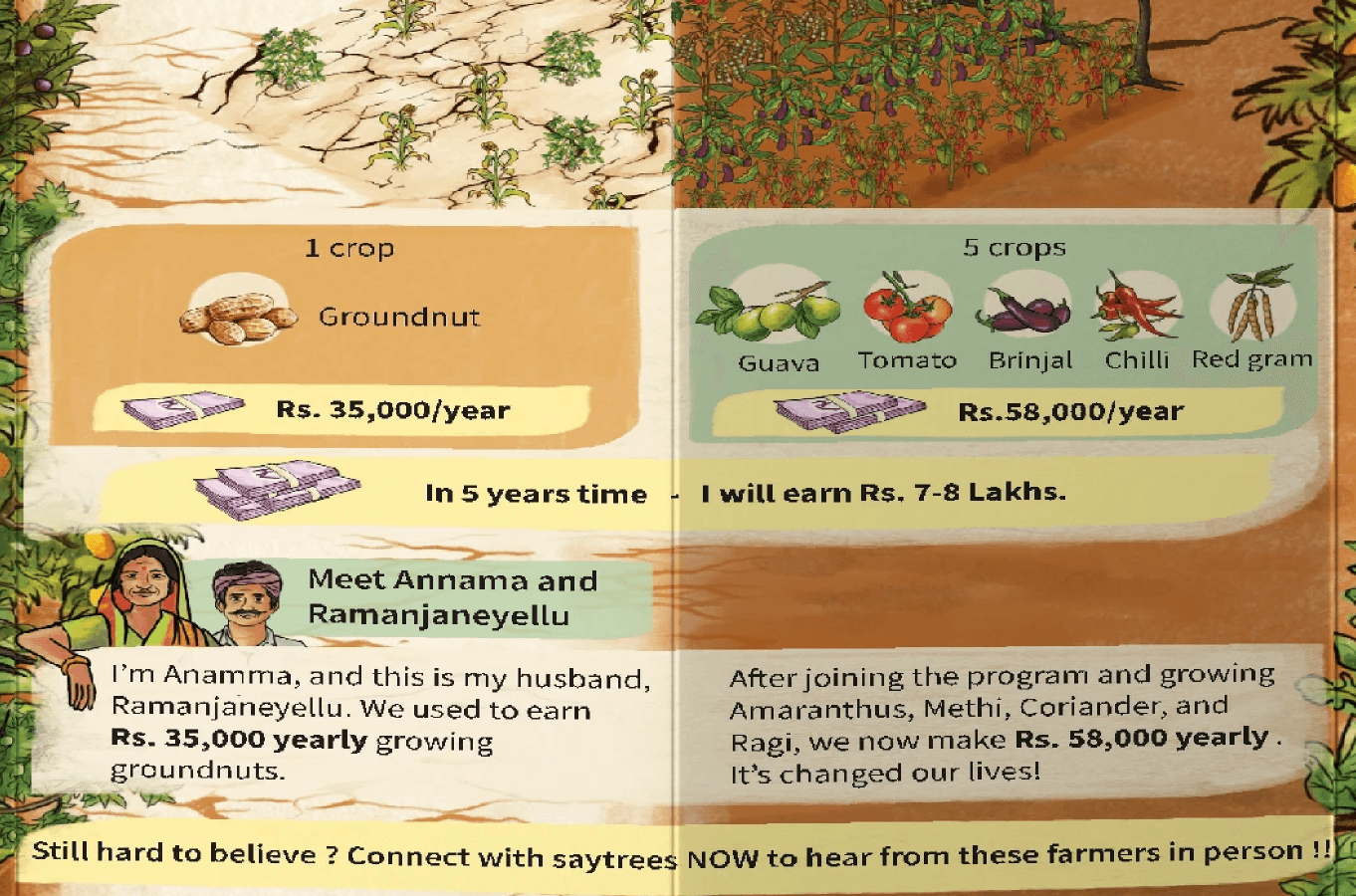
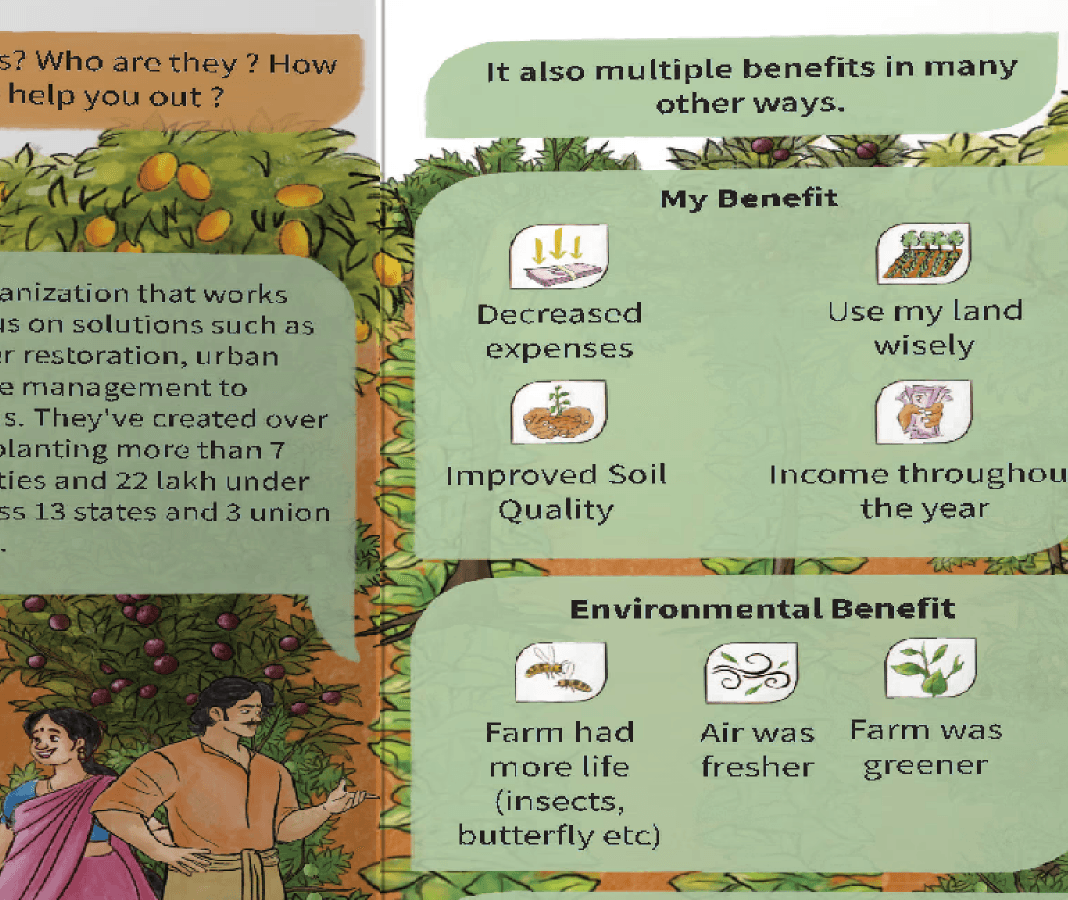
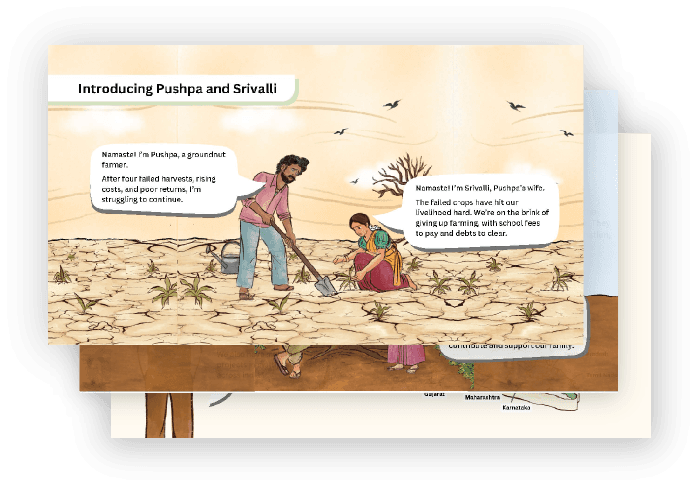
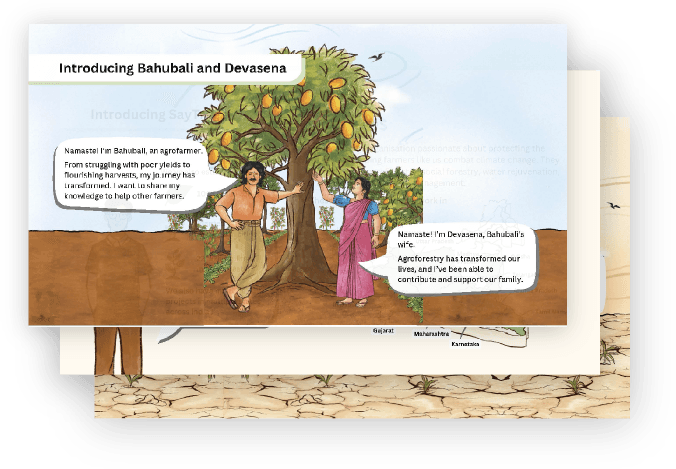
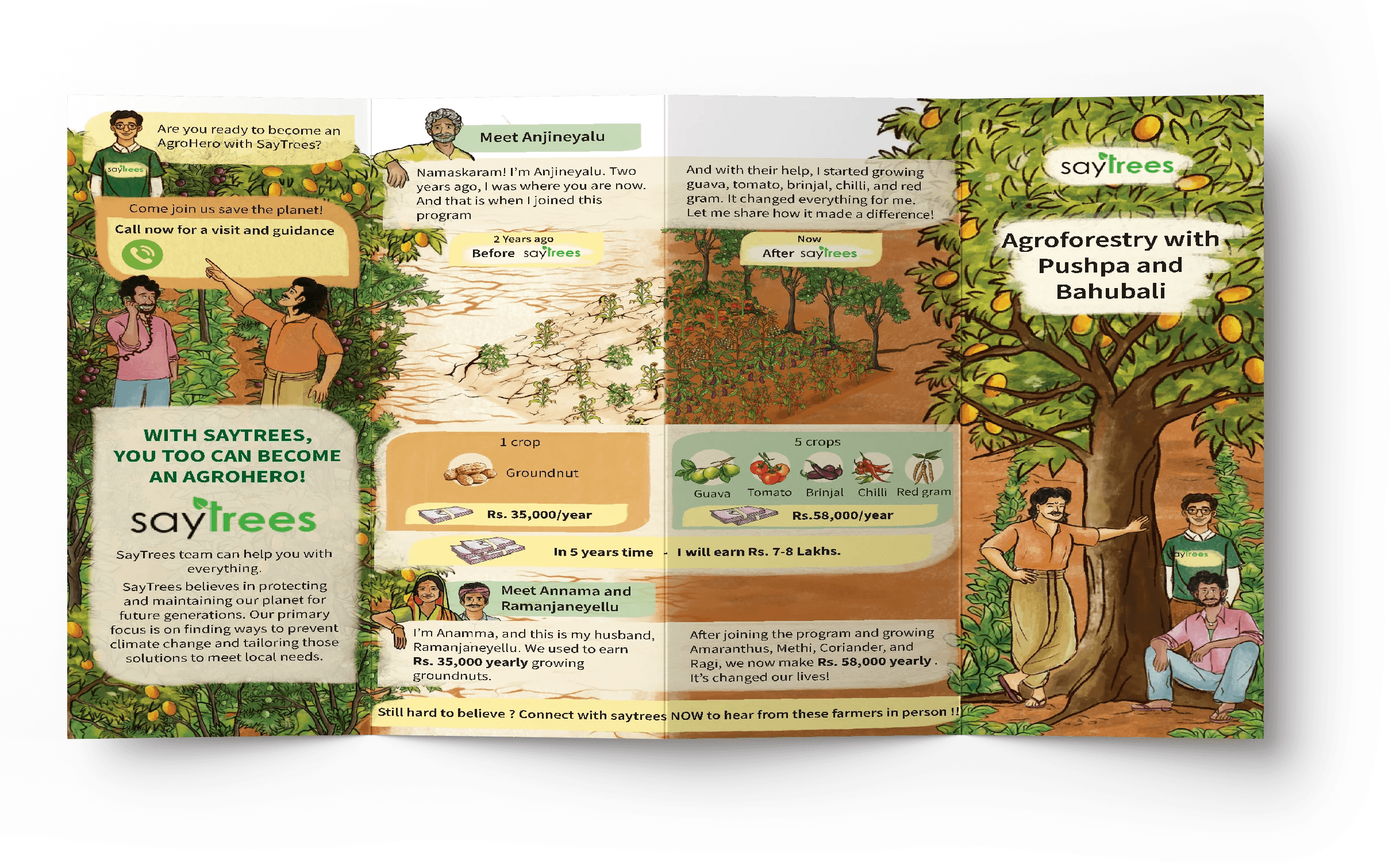
A brochure introducing the organisation & agroforestry
This brochure introduces farmers to Agroforestry through real stories of challenges and transformation. It supports farmers in shifting to sustainable practices, combining trees and crops for better soil, steady income, and climate resilience. It’s a quick, inspiring guide to farming a greener future.
View Brochure
Presentation
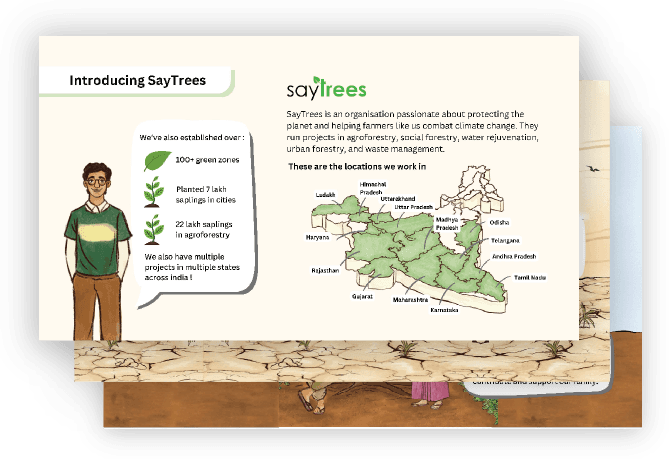
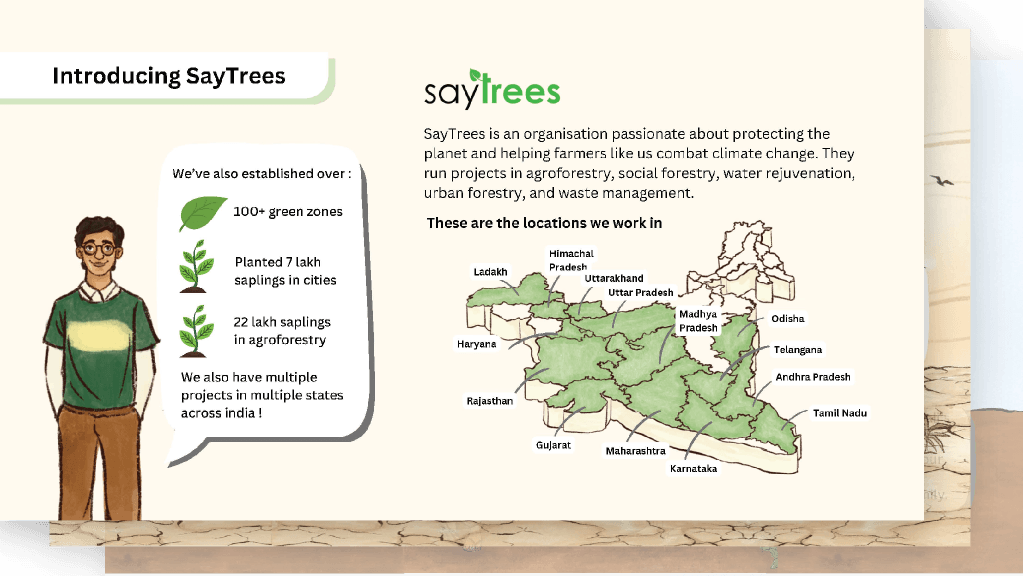
A presentation used by technical & field team in baithaks
Alongside the booklet, this presentation was designed for field teams to use in their conversations with farmers. It breaks down the basics of agroforestry through visuals, farmer stories, and step-by-step guidance—making it easier to spark interest, answer questions, and build trust on the ground.
View Presentation


Booklet
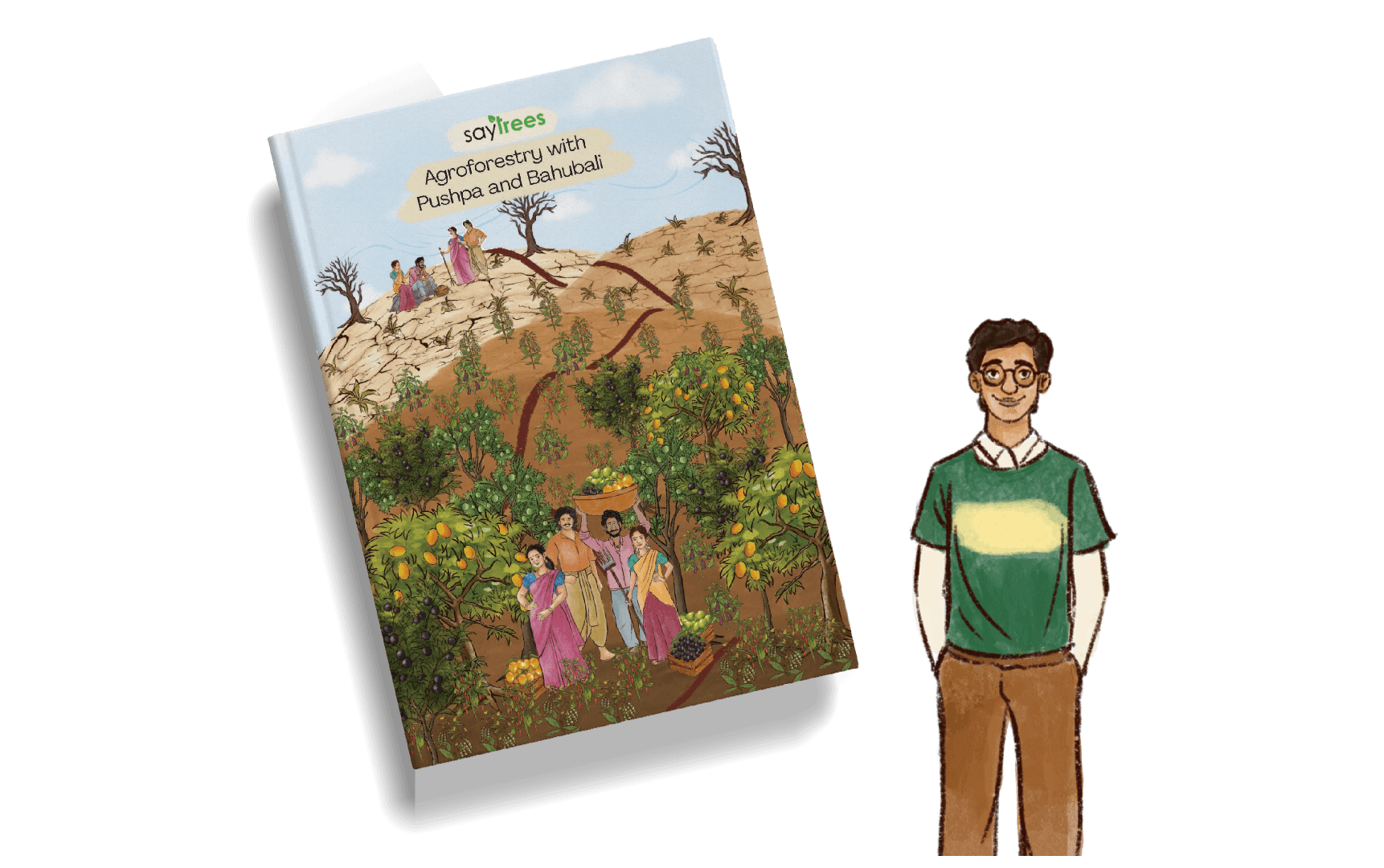
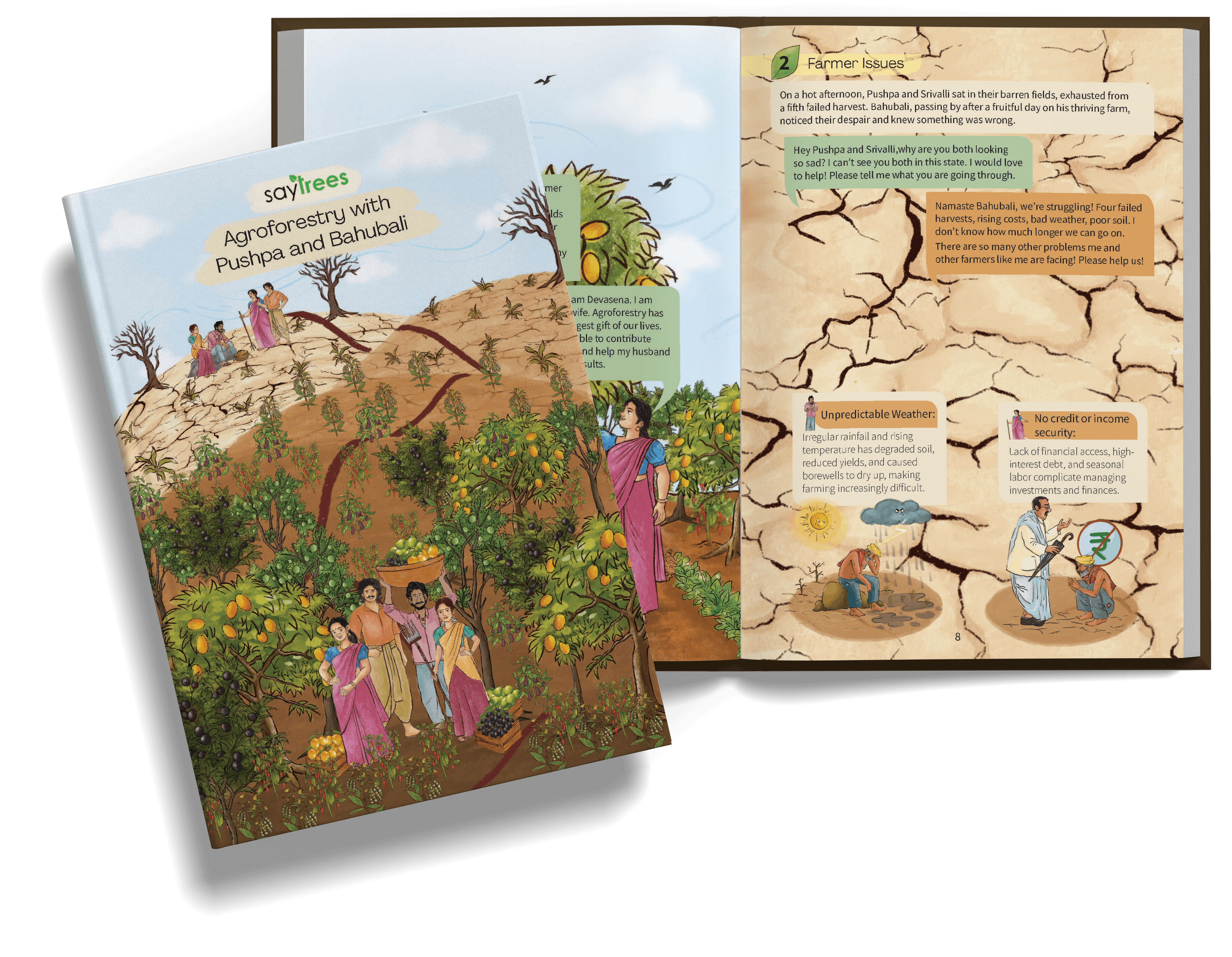
An illustrated agroforestry booklet for farmers
This easy-to-follow booklet helps farmers understand how agroforestry can improve their land, income, and resilience to climate change.
It covers real farmer stories, practical tips, steps to get started, financial insights, and more — all designed to make the shift to sustainable farming simple and doable.
View Booklet
Our Process
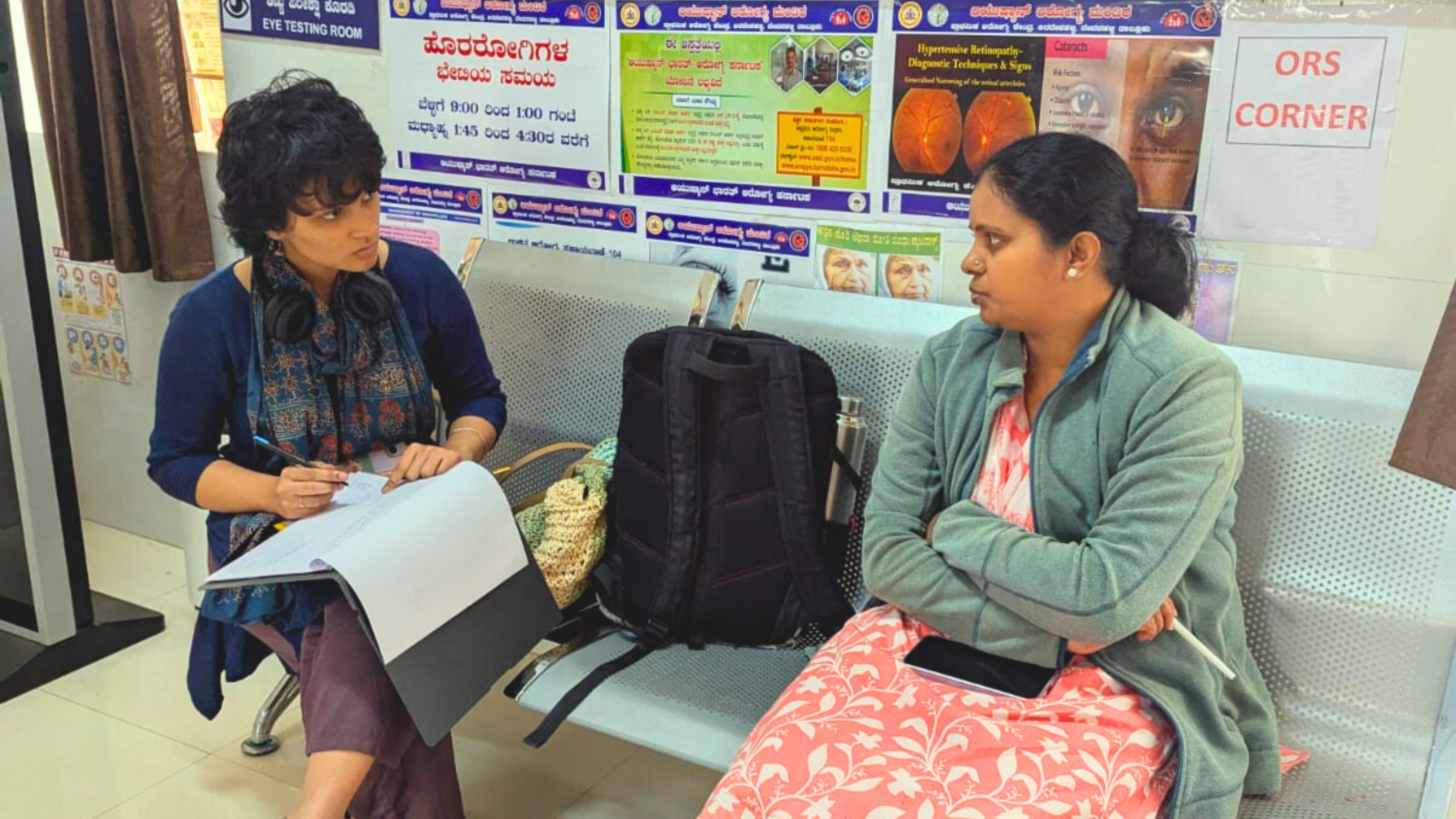
1
Immersion
We began understanding farmers’ perceptions of agroforestry, including doubts, motivations, and information gaps, to identify behavioural and communication barriers limiting adoption.
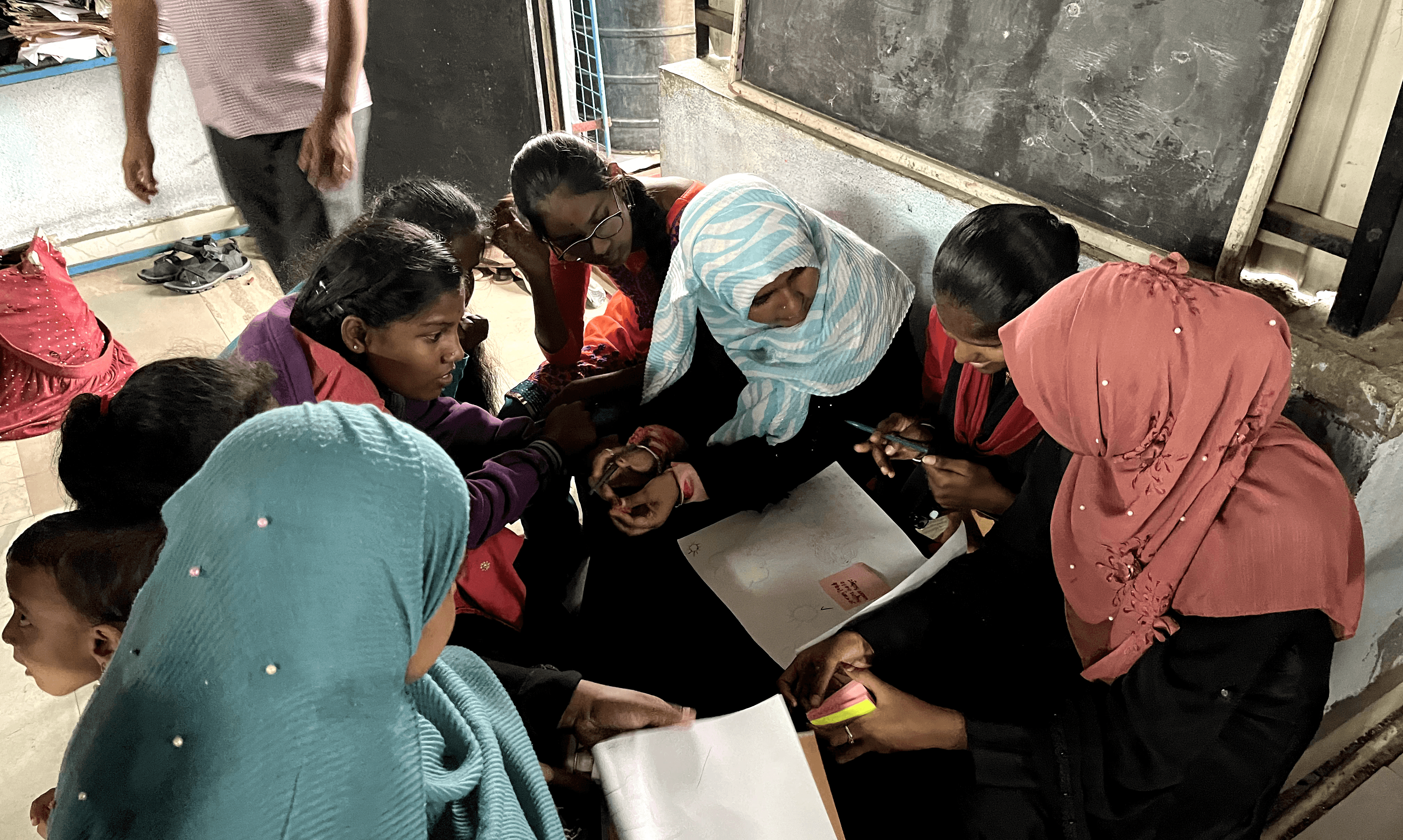
2
Explore & Identify
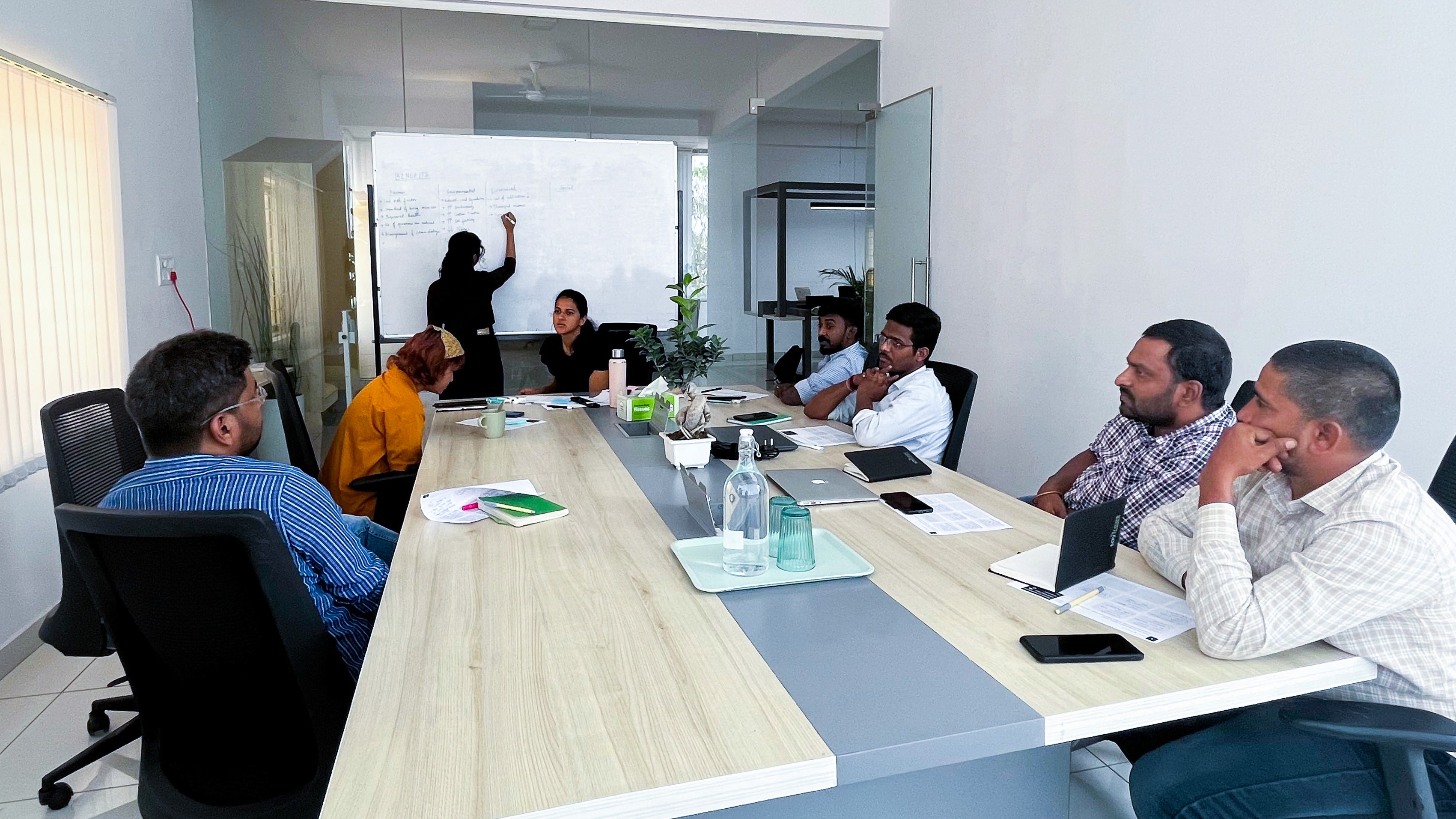
Through discussions with stakeholders, we mapped challenges such as technical language, unclear financial timelines, and doubts around SayTrees’ support, and defined what farmers needed at each stage of decision-making.
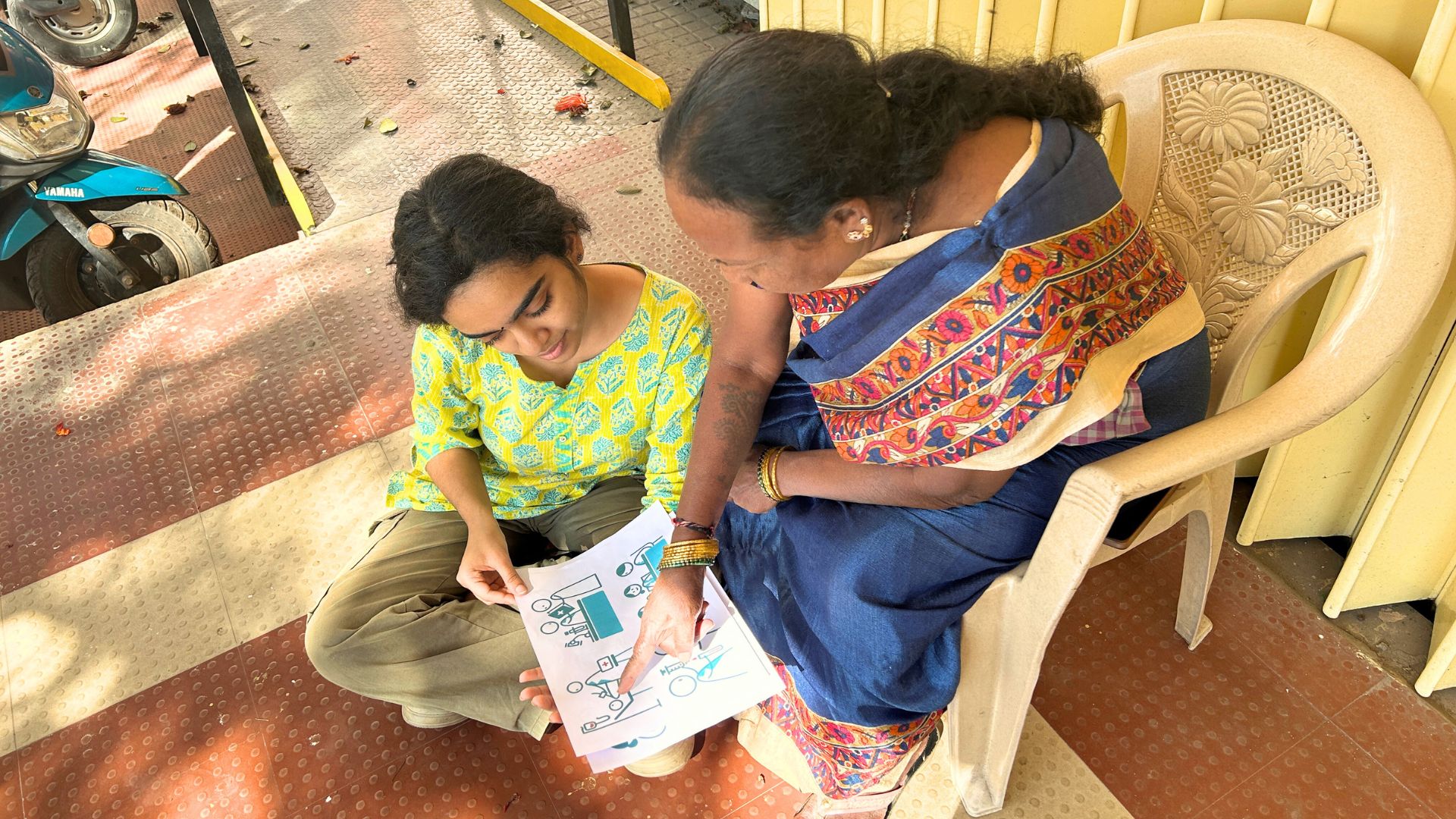
3
Ideate & Co-create
Working closely with SayTrees’ experts and field teams, we co-created simple, low-literacy tools including brochures, presentations, and booklets, aligned with the natural rhythm of the farmer’s journey.
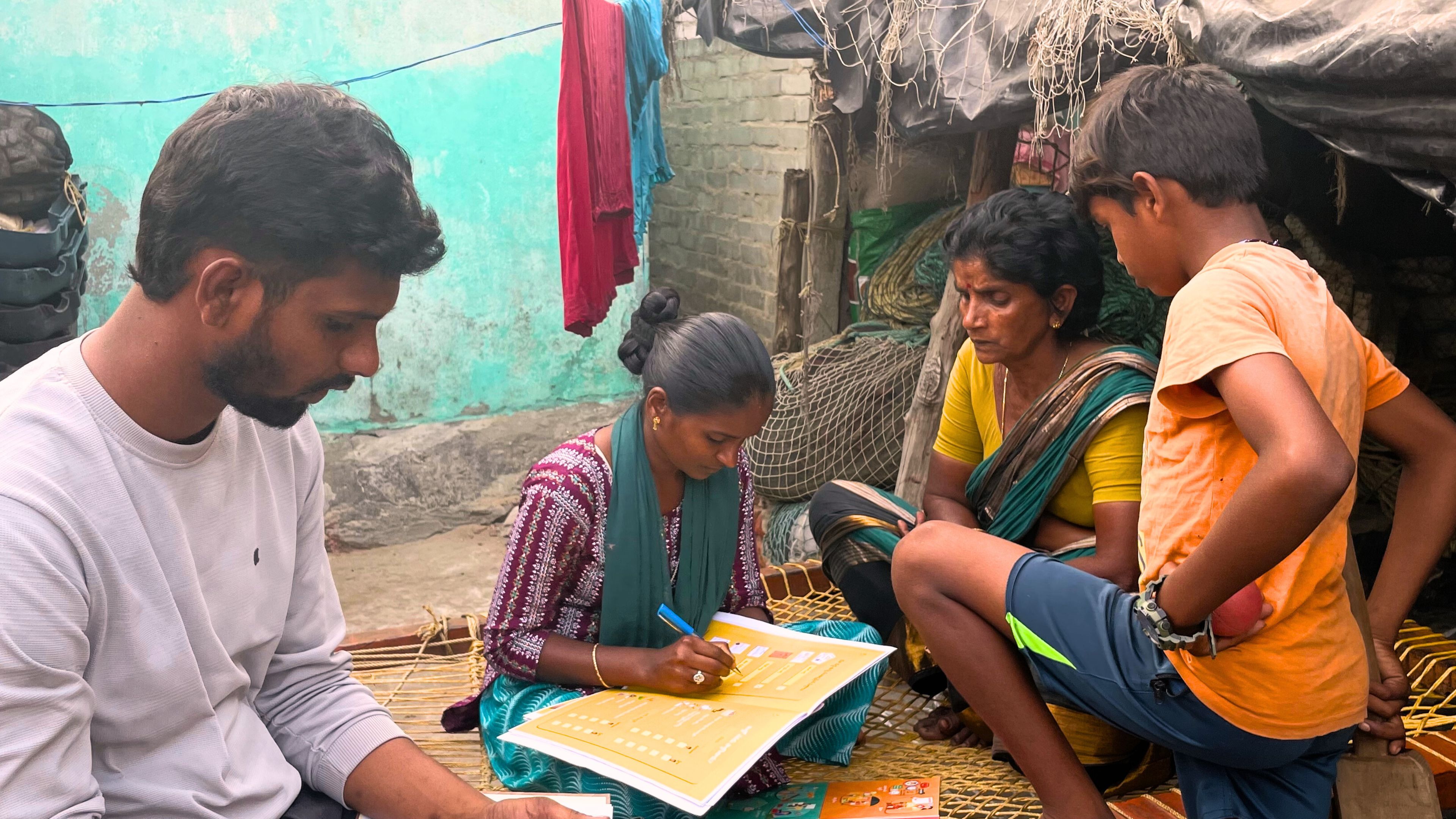
4
Pilot & Testing
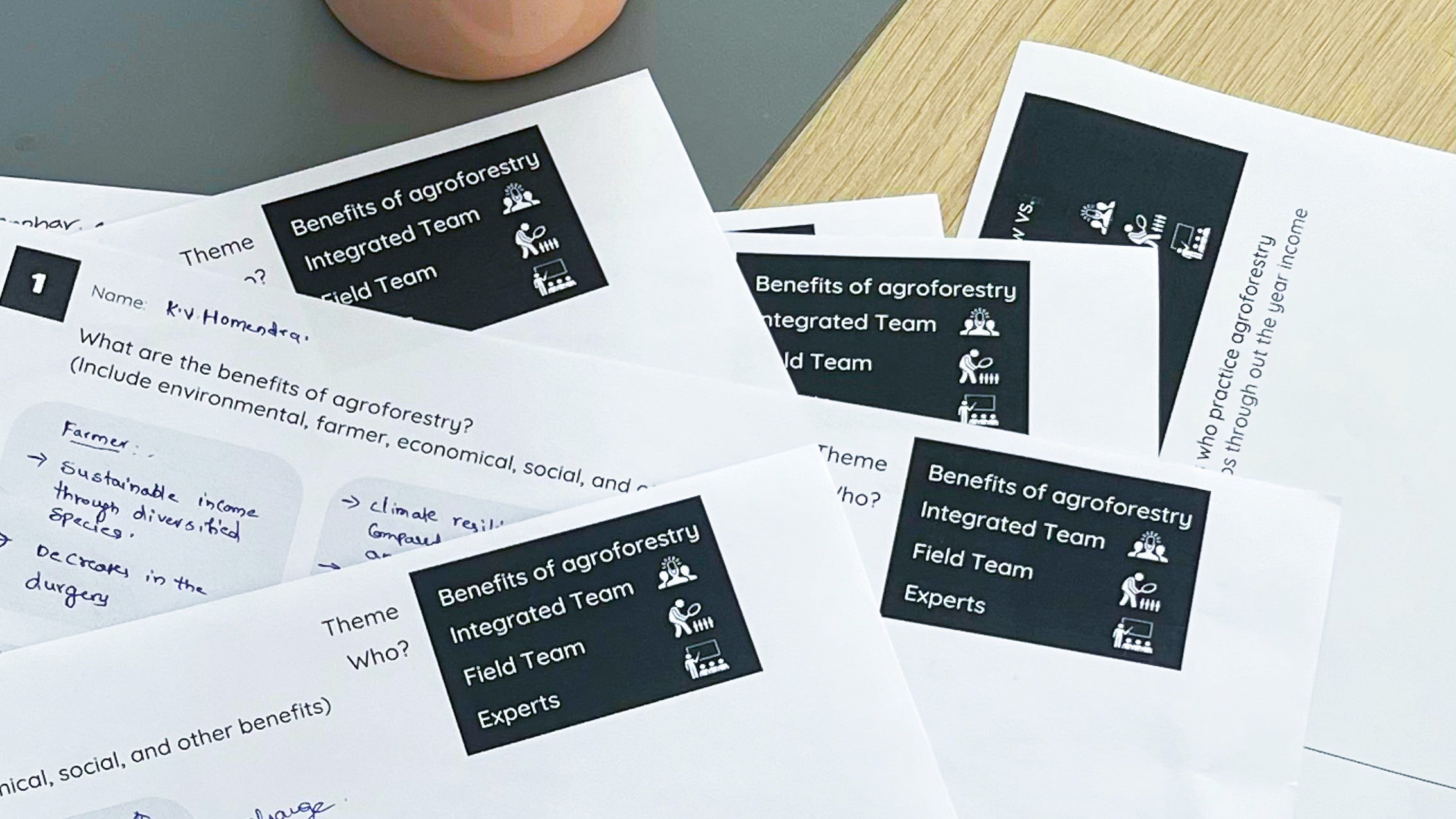
The toolkit was tested across farmer meetings, exposure visits, and field sessions to assess clarity and engagement, with feedback guiding refinements for practical on-ground use.
Our Impact
The toolkit was built as a connected system, creating the right conditions for farmers to understand, decide, and adopt agroforestry sustainably.
Increased Awareness
Increased Adoption
Mindset & Practice Shift
Improved Livelihood
Outcomes
Co-created tools and engagement systems that enabled farmers to relate to agroforestry, see its value, and act on it while easing communication for implementing teams.
Higher Farmer Interest & Intent
Simplified and localised communication helped see agroforestry as relevant and beneficial, increasing openness and willingness to adopt.
Reduced Effort for Field Teams
Ready-to-use visual aids and scripts reduced dependency on individual facilitation styles, freeing up time and cognitive effort for deeper engagement and follow-up.
Shift from Farmer Awareness to Ownership
Farmers began discussing, comparing, and planning tree choices with peers and field teams, signalling to active consideration and agency.
Empowering farmers to shift to agroforestry
Tools and Frameworks we used
Behaviour science tools and frameworks help us understand how people think and act, reveal what drives(or blocks) change, and design interventions that work in the real world.
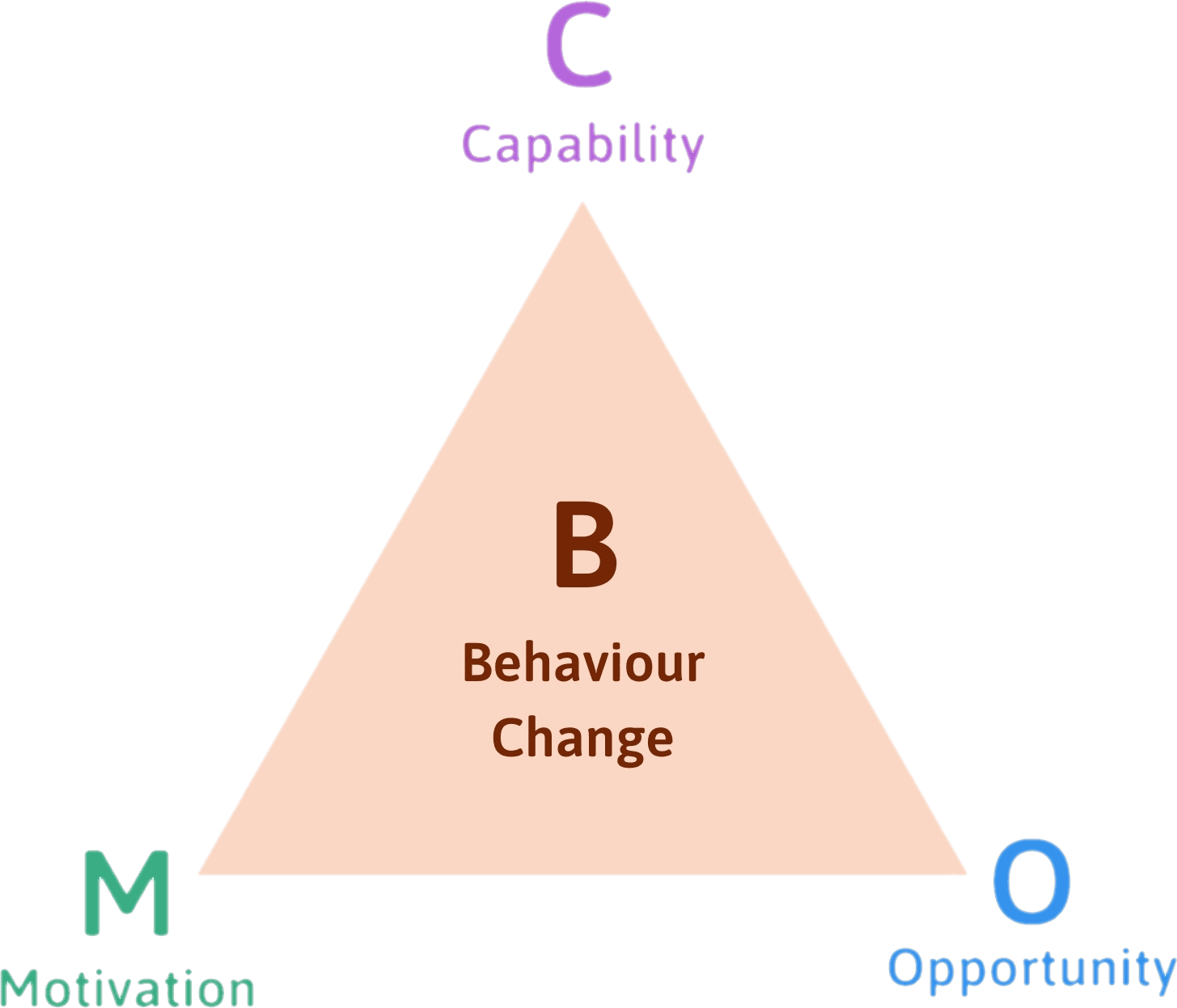
COM-B model
We used the COM-B Model to address key levers: Capability, Opportunity, and Motivation. Visual tools built understanding, exposure visits created opportunity, and farmer stories strengthened motivation. We’ve also created a worksheet template to help you map the COM-B levers in your own program to drive real behaviour change.
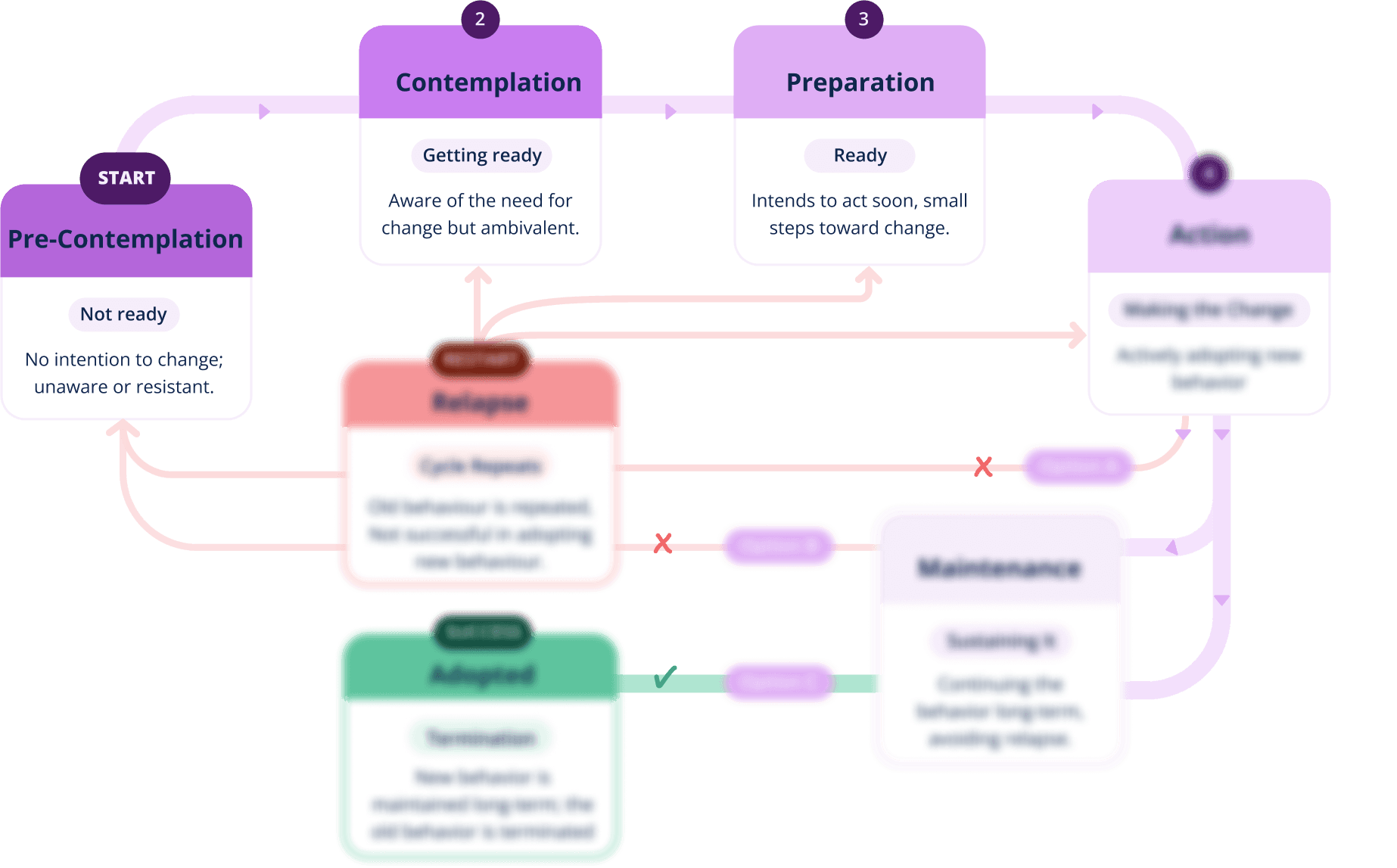
States of Change
We mapped each tool to a stage in the journey: the brochure for contemplation, presentation for preparation, and booklet for action, ensuring farmers received the right cue at the right time. We’ve also detailed this approach in our playbook, showing how you can map audience readiness that move them from awareness to sustained action.
What They Say About Us
These tools have simplified my work significantly. The clear instructions and easy-to-use templates have helped me to collect accurate data, track progress, and report effectively. I can now spend more time in the field and less time on paperwork.

Field Officer