Social & Behaviour Change
September 1st, 2025
Nudges That Reshaped India’s LPG Subsidy
A behavioural-science lens on how DBT shifted defaults and reshaped public participation.
Ankita Mirani, Social Designer and Founder @Social Innovation Studio


Source: Gaon Connection
What’s Inside:
Introduction
Subsidy reforms are often seen as complex, technical exercises. But the story of India’s LPG subsidy reform through the Direct Benefit Transfer (DBT) system shows something different: meaningful change happens when policy design and human behaviour work together.
For years, India’s LPG subsidy system struggled with duplicate accounts, misuse, and poorly targeted benefits. Instead of relying only on administrative fixes, the government adopted a behavioural approach, changing defaults, reframing incentives, and making the impact of individual actions more visible.
The result became one of the most significant behaviour-led reforms in public finance. Let’s dive into how the program reimagined subsidy delivery to create transparency and smarter consumption.
A System in Need of Behavioural Redesign
Inefficiencies in the previous subsidy model made misuse easy and accountability difficult. The shift to Direct Benefit Transfer( linking subsidies directly to people’s bank accounts) did more than improve the backend architecture.
It reset the default behaviour, making people more conscious of real costs and reducing leakages. In behavioural science, this matters: when you change the default, you often change the behaviour.
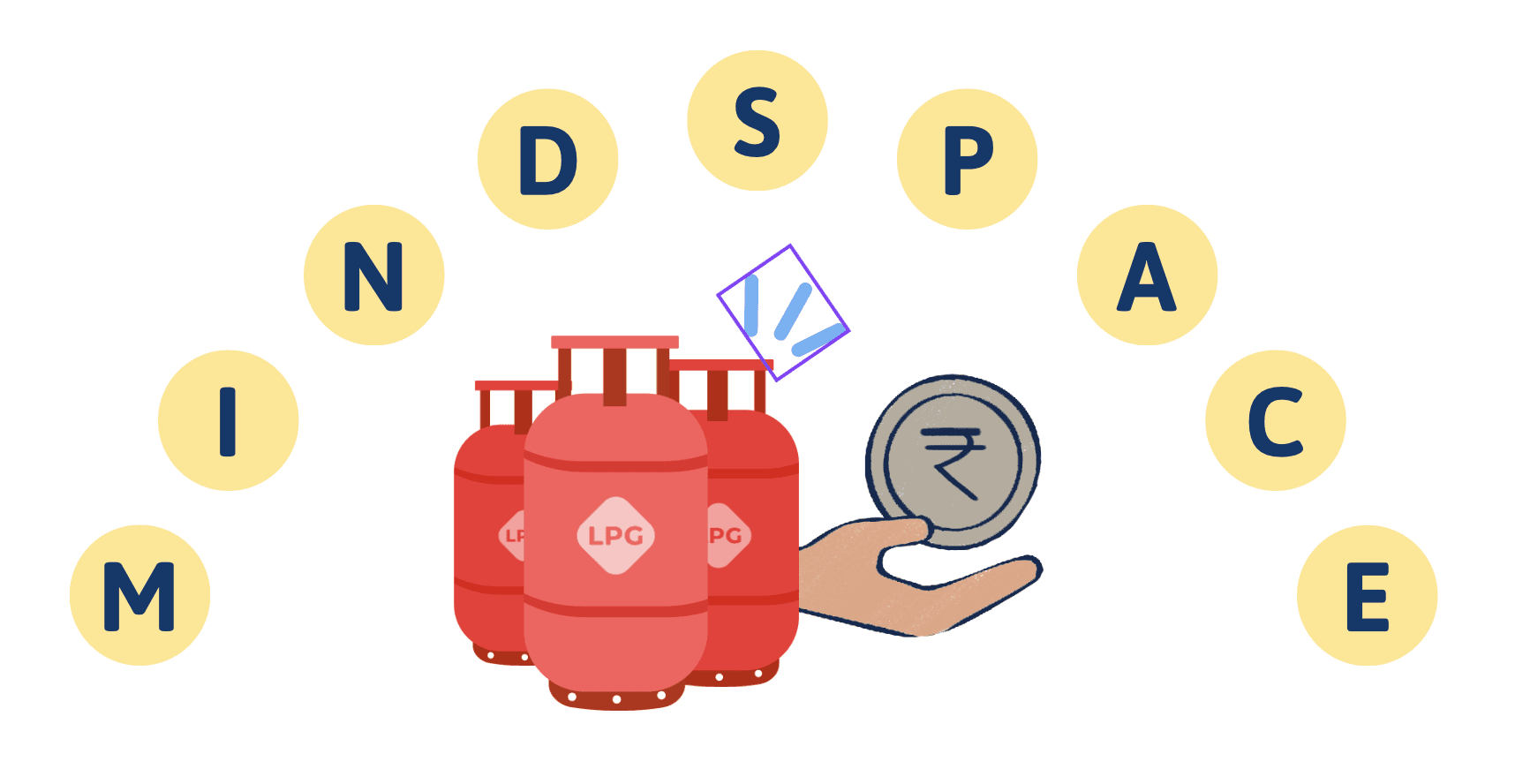
How MINDSPACE Principles Shaped the Reform
The success of DBT was a strategy that leveraged key levers from the MINDSPACE framework:
Defaults: Making the right behaviour the easier one
Earlier, households received the subsidy automatically at the point of purchase. Under DBT, they paid the full market price upfront and received the subsidy later.
This simple shift:
increased cost-awareness
reduced unnecessary refills
minimised misuse and duplication
Incentives: Framing contribution as pride, not loss
The ‘Give It Up’ campaign appealed to identity and social responsibility. Wealthier households were asked to voluntarily surrender their subsidy, and over 10 million did. The incentive wasn’t financial. It was emotional and social.
Salience: Making the impact visible
Communication focused on how a surrendered subsidy directly supported lower-income families. By showing the human impact, the message became relevant, personal, and motivating.
These behavioural drivers worked together to make a complex reform feel intuitive and meaningful.
Why DBT Shifted Behaviour?
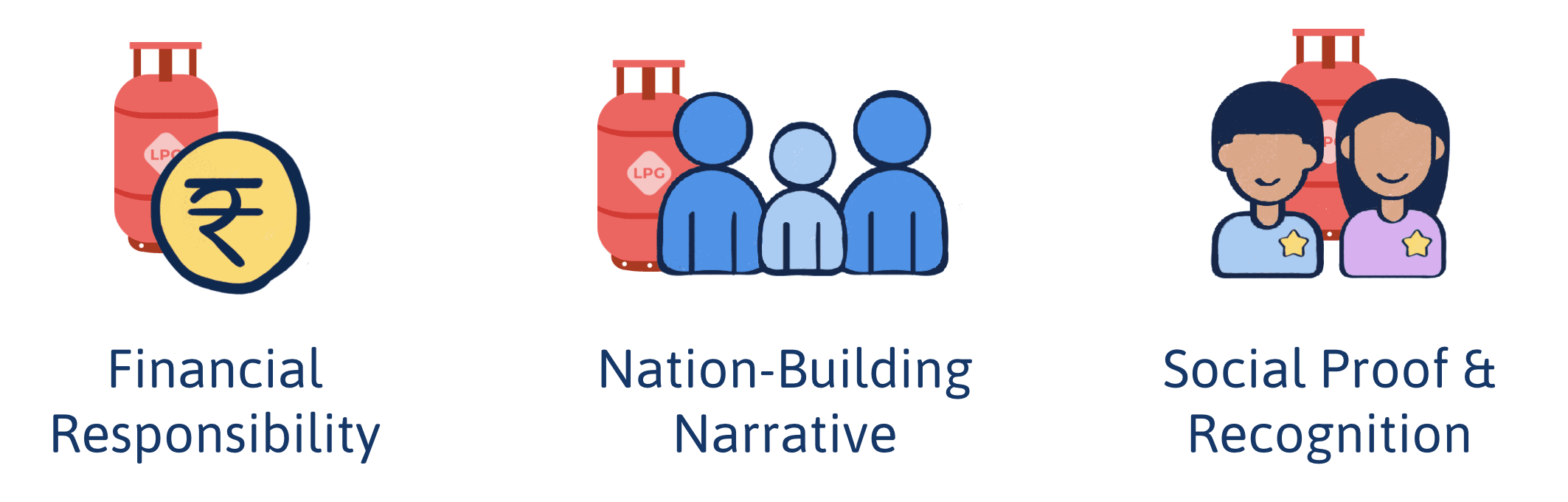
Financial Responsibility
Paying the full price upfront normalised the idea of ownership and reduced dependency.
Nation-Building Narrative
Framing the act as patriotic redirected the conversation from “losing a subsidy” to “contributing to India’s progress.”
Social Proof & Recognition
Public acknowledgements to those who opted out created a cascade of social influence where one household’s choice sparked another’s.
Behaviour science tells us: When identity, norms, and meaning align, people happily shift their behaviour.
Impact at Scale
The numbers show what becomes possible when policy and behaviour science come together:
290+ million LPG connections linked to bank accounts
10+ million households voluntarily gave up their subsidy
Significant reduction in leakages and improved targeting
Insight:
Changing defaults is powerful because when the environment nudges the right behaviour, scale becomes achievable.
Conclusion
The DBT reform is a reminder that public systems don’t change through information alone; they change when people are guided, nudged, and meaningfully engaged. By redesigning defaults, reframing incentives, and making the impact visible, the reform turned a technical shift into a people-powered movement.
Any organisation designing subsidies, welfare schemes, or scaling public programs can apply the same lesson: Start with how people think, decide, and act and build your intervention around that.